CAMERA FOCUS MODES
Hit your subject every time — learn to choose the right focus mode, focus area and subject detection.
Mode and area – two different things
Focusing always involves two choices. The focus mode tells how the camera focuses: once or continuously. The focus area tells where in the frame the camera looks for the subject. First we go through the modes, then the areas and the subject detection of modern cameras.
S Single AF (One-Shot / AF-S)
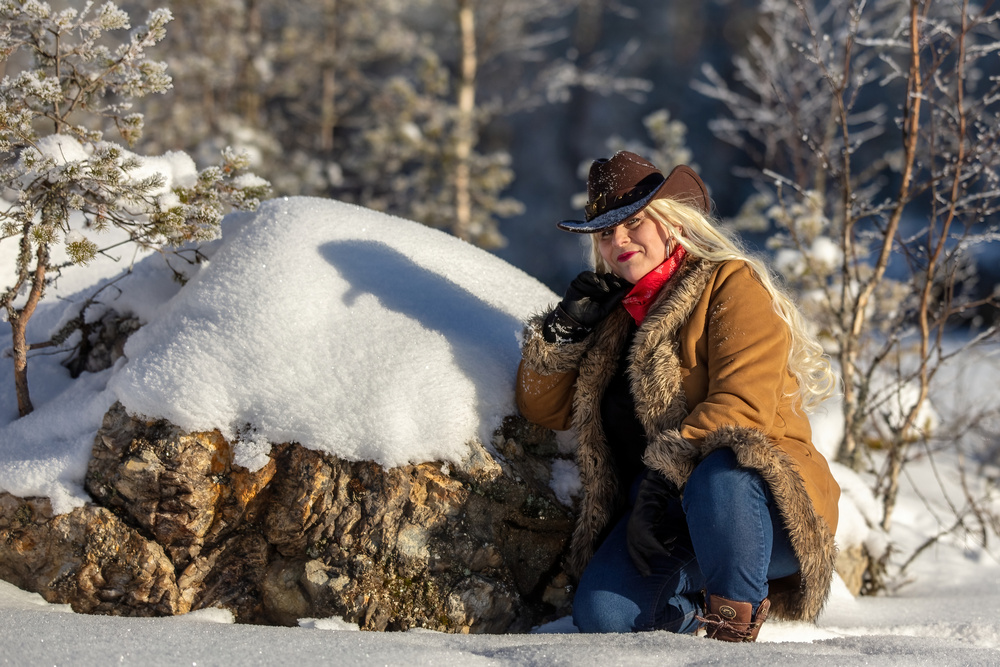
The camera focuses on the subject once when you half-press the shutter button and locks the distance. Focus stays put for as long as you keep your finger on the button. The best mode for subjects that stay still, such as portraits, landscapes and product photos.
C Continuous AF (AI Servo / AF-C)
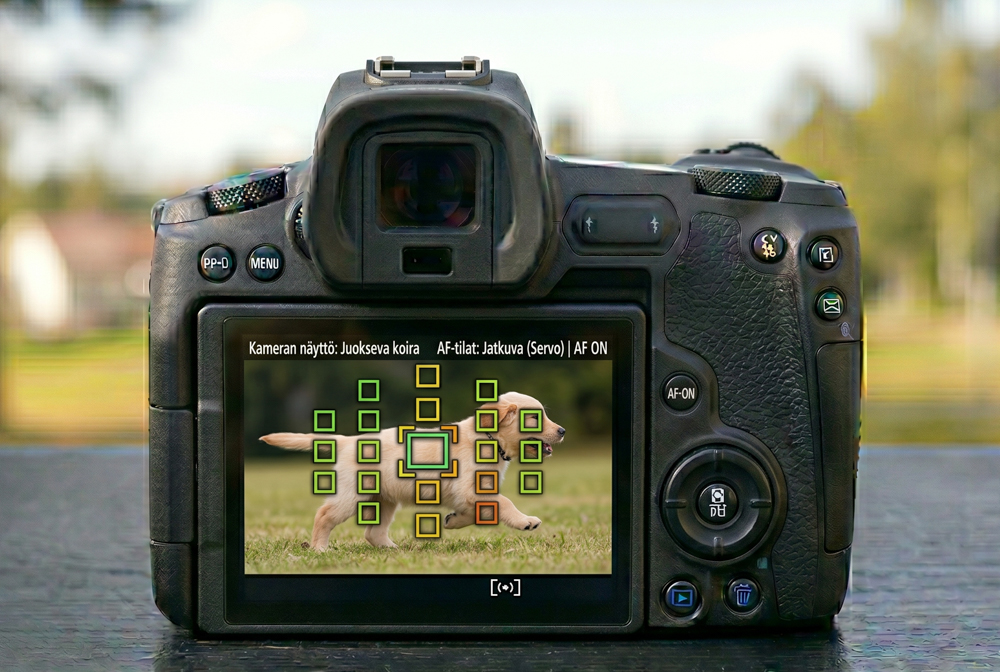
The camera actively follows a moving subject and keeps correcting the focus for as long as the shutter button is half-pressed. A must for sports, running children, pets or any moving subject.
Tip: Keep the focus point firmly on the subject so the camera can predict the movement correctly.
A Automatic (AI Focus / AF-A)
The camera decides the mode for you. It starts as single AF, but if the subject moves, it switches to continuous tracking. That sounds handy, but the camera can misjudge the situation, so most photographers prefer to choose AF-S or AF-C themselves.
Not every camera has this mode. On Canon’s mirrorless R cameras, for example, you usually choose only One-Shot or Servo.
MF Manual focus (MF)
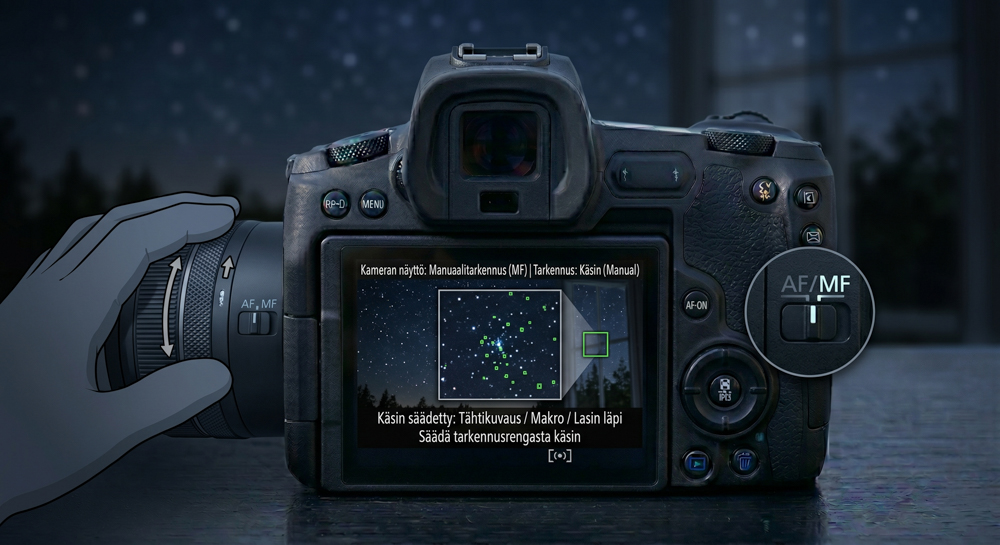
You switch the autofocus off completely with the switch on the lens or the camera body (AF → MF) and turn the lens’s focus ring by hand until the subject is sharp. It is used especially for night photography (stars), macro and shooting through glass.
- Magnify: Zoom in on the view in the viewfinder or on the screen (5–10×) and focus on the magnified image.
- Focus peaking: On mirrorless cameras, sharp edges are highlighted in colour, which makes manual focusing much easier.
- Stars: Zoom in on a bright star and turn the ring until the star is the smallest possible point. The infinity mark on the ring is usually not exact.
Where does the camera focus?
The names of the areas vary between brands, but the principle is the same. The smaller the area, the more precisely you decide – the larger it is, the more the camera decides.
- Single point / Spot: A small point that you move onto the subject yourself. The most precise choice for still subjects and among branches, where the camera would otherwise grab the foreground.
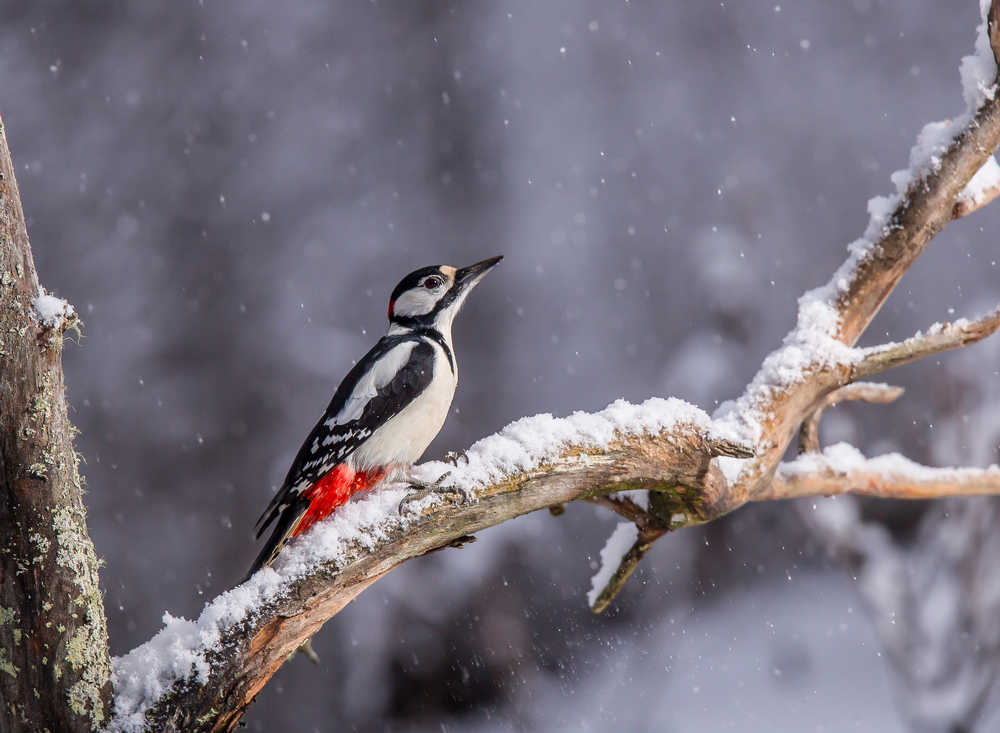
- Expanded point: The point has helper points around it that help if the subject slips out from under it for a moment. Good for birds on a branch and moving pets.
- Zone: A larger area within which the camera picks the subject. Suits birds in flight against the sky, and sports.
- Whole area / Wide + tracking: The camera looks for the subject in the whole frame and follows it. Works superbly together with subject detection, but can pick the wrong subject in a busy scene.
Subject detection and eye AF
Mirrorless cameras recognise people, animals, birds and vehicles and focus straight on the eye. This is the biggest change in autofocus in decades.
- Choose the right subject type: People, animals or birds. Some cameras detect the type automatically, but the right choice works more reliably.
- Combine it with AF-C: Continuous focus and eye detection together keep a moving animal’s eye sharp through the whole burst.
- Limit the area if needed: If the camera picks the wrong bird or person, reduce the focus area to a zone. Detection then works only inside it.
Back-button focus
Focusing is moved from the shutter button to a button on the back of the camera (often AF-ON). Your thumb focuses and your index finger only takes the picture.
- Two modes in one: Hold the back button down and focus follows the subject (AF-C). Let go and the focus locks (like AF-S). No need to switch modes in the menu.
- Recompose without worry: Once the focus is locked, you can recompose the shot without the camera refocusing when you press the shutter.
Getting used to it: The technique takes a couple of photo trips to get used to. Try it first in a calm situation before an important shoot.
QUICK CHECKLIST
| Landscape, product photo | → AF-S + single point |
| Portrait | → AF-C + eye detection |
| Bird on a branch, pet | → AF-C + expanded point |
| Bird in flight, sports | → AF-C + zone or whole area |
| Night / stars / macro / through glass | → Manual focus (MF) |