Bodies · Lenses · Drone

My gear

The gear I use to photograph landscapes, birds, macro and the northern lights. For each one I tell you what I use it for, what is good about it and what isn't – and which pieces travel together on photo trips.

24items
18lenses
15–600mm focal lengths

❦Pack the camera bag

What are you going out to shoot? Pick a subject and I'll pack the bag with the gear I would take myself. Use the plus and minus buttons to put together your own bag – the weight is added up as you go.

Pick a subject to fill the bag

The bag is still empty. Choose above what you are going out to shoot.

❦All my gear

No gear in this group.

❦Focal lengths 15–600 mm

Each lens on its own row. Click a bar to open the details.

Canon EF 100mm f/2.8L Macro IS USM
Sigma 105mm f/2.8 EX DG Macro OS HSM
Sigma 35mm f/1.4 Art
Sigma 135mm f/1.8 DG HSM Art
Canon EF 50mm f/1.8 STM
Canon EF 300mm f/4L IS USM
Sigma 24-35mm f/2 Art DG HSM
Canon EF 16-35mm f/2.8L III USM
Canon EF 70-200mm f/2.8L IS II USM
Canon EF 70-200mm f/4L USM
Canon EF 70-300mm f/4-5.6L IS USM
Tamron SP 150-600mm f/5-6.3 Di VC USD G2
Sigma 150-600mm f/5-6.3 DG OS HSM Sports
Canon EF 70-300mm f/4-5.6 IS USM
Tamron SP 15-30mm f/2.8 Di VC USD
Canon EF 70-200mm f/2.8L USM
Tamron SP 150-600mm f/5-6.3 Di VC USD (A011)
Canon EF-S 18-55mm f/3.5-5.6 IS II

Focal lengths on full frame. On APS-C bodies (7D, 650D, 1100D) the image is cropped 1.6 times, so for example 600 mm equals about 960 mm.

❦Crop factor calculator

The same lens shows a different amount of the scene on different bodies. APS-C bodies (7D, 650D, 1100D) have a smaller sensor than full frame, so the image is cropped 1.6 times – just as if the lens were longer. That is why an APS-C body is often the better choice for bird photography.

Field of view equals on full frame960 mmHorizontal angle of view 1.3°
BodySensorFull-frame equivalentHorizontal angle
The angle of view is worked out from the sensor width: the smaller the angle, the further the lens “sees”.

❦Focal length simulator

This frosty barn was shot with the 5Ds and a 16 mm wide angle. Change the focal length to see how much of the scene would fit in the frame from the same spot. Click the photo to choose where the lens points.
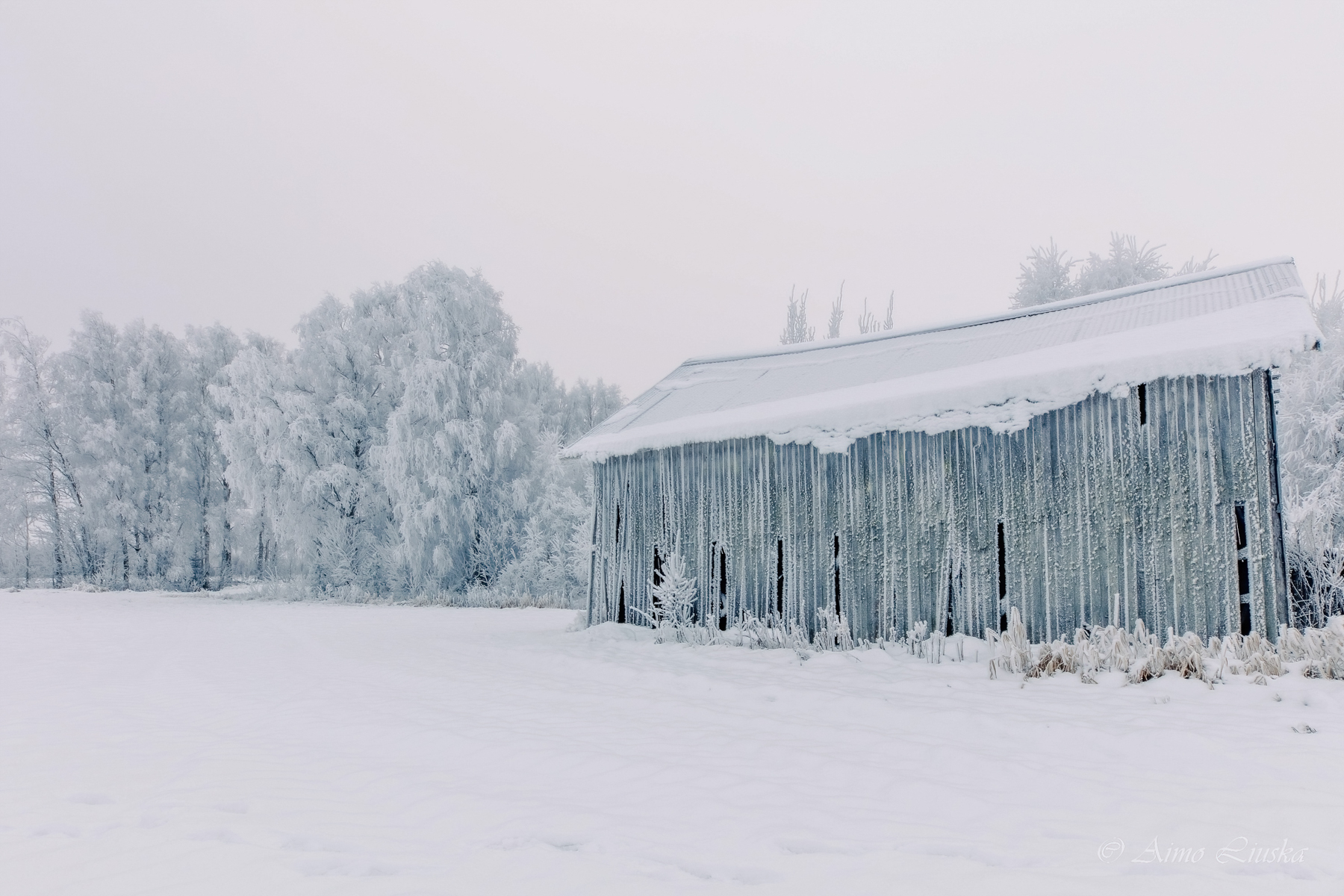
A frosty barn and birch grove in winter, shot at 16 mm
16 mm
16 mm
16 mmThe whole photo: this is how wide 16 mm sees.
Quick picks
Sensor

❦Shot with this gear

The EXIF data of the 446 photos in the gallery shows which gear I really use the most. Click an item to see the photos taken with it.

Bodies and drone

Lenses

❦Favourite combinations

Landscapes

Canon EOS 5Ds + Canon EF 16-35mm f/2.8L III USM

50 megapixels and a sharp wide angle on a tripod.

Read the guide (in Finnish)

Birds and animals

Canon EOS 7D + Tamron SP 150-600mm f/5-6.3 Di VC USD G2

With the APS-C crop the reach equals about 960 mm.

Read the guide (in Finnish)

Macro

Canon EOS 5Ds + Canon EF 100mm f/2.8L Macro IS USM

True 1:1 magnification and plenty of room to crop.

Read the guide (in Finnish)

Portraits

Canon EOS 6D + Sigma 135mm f/1.8 DG HSM Art

A soft background and full-frame tones.

Read the guide (in Finnish)

Northern lights and night

Canon EOS 6D + Sigma 24-35mm f/2 Art DG HSM

A body that handles high ISO well and f/2 across the whole zoom range.

Read the guide (in Finnish)

From the air

DJI Mini 3 Pro

A new angle on landscapes, under 249 g.

Read the guide (in Finnish)
Bodies and drone · 50.6 MP · full frame

Canon EOS 5Ds

A 50.6-megapixel full-frame camera for landscape photography. The huge resolution allows big prints.

Canon EOS 5Ds
What I use it for

I use the 5Ds for landscapes and macro – whenever I want a large print or plenty of room to crop. The camera is at its best on a tripod at low ISO, where the 50-megapixel detail really shows.

Shot with this · 424 photos in the gallery

Most used lens 24-35mm F2 DG HSM · most used aperture f/8

All photos in the gallery

Pros

  • Huge resolution
  • Solid weather sealing
  • Amount of detail
  • Colour rendering
  • Build quality

Cons

  • Large file sizes
  • ISO performance in low light
  • Limited video features
  • Dynamic range
Specifications
Sensor50.6 MP full frame (36 x 24 mm CMOS)
ProcessorDual DIGIC 6
Autofocus61 points (41 cross-type)
ISO range100 – 6,400 (expandable 50 – 12,800)
Burst rate5 fps
ViewfinderOptical (100% coverage)
Screen3.2" Clear View II LCD (1.04M dots)
VideoFull HD (1080p) 30 fps
Memory cardsCF + SD/SDHC/SDXC (UHS-I)
WeightAbout 845 g (body only)
Bodies and drone · 20.2 MP · full frame

Canon EOS 6D

A classic full-frame camera known for its excellent low-light performance.

Canon EOS 6D
What I use it for

The 6D is my body for low light: northern lights, starry skies and indoors. Images stay clean even at ISO 3200–6400, and the light body is easy to take along on night trips.

Pros

  • Low-light performance
  • Light body
  • Affordable full frame
  • Excellent image quality
  • Quiet shutter

Cons

  • Only 11 focus points
  • Dated technology
  • Slow burst rate
  • Fastest shutter speed 1/4000 s
  • Video limitations
Specifications
Sensor20.2 MP full-frame CMOS
ISO range100 – 25,600 (expandable to 102,400)
Autofocus11 points (1 cross-type in the centre)
Burst rate4.5 fps
ConnectivityWi-Fi, GPS
WeightAbout 680 g (body only)
Bodies and drone · 18 MP · APS-C · 8 fps

Canon EOS 7D

A fast and tough APS-C body that feels at home when things move quickly.

Canon EOS 7D
What I use it for

I take the 7D along for bird and wildlife photography. The 1.6x crop factor of the APS-C sensor gives telephoto lenses extra reach, and 8 frames per second is enough to freeze the action.

Pros

  • Fast burst rate
  • Very tough build
  • Autofocus
  • Good viewfinder
  • Good image quality in good light

Cons

  • Noise at high ISO
  • Battery life
  • No tilting screen or Wi-Fi
Specifications
Sensor18.0 MP APS-C CMOS
Burst rate8 fps
Autofocus19 cross-type points
BuildWeather-sealed magnesium body
WeightAbout 820 g (body only)
Bodies and drone · 18 MP · APS-C · tilting screen

Canon EOS 650D

A light, versatile body with a vari-angle touchscreen. Great for video.

Canon EOS 650D
What I use it for

The 650D is my light second body and my video camera. The vari-angle touchscreen makes shooting from low and high angles easier, and I can keep a second lens mounted on it, ready to go.

Shot with this · 6 photos in the gallery

Most used lens EF-S18-55mm f/3.5-5.6 IS II · most used aperture f/8

All photos in the gallery

Pros

  • Vari-angle touchscreen
  • Compact size

Cons

  • Battery life
  • Small grip
Specifications
Sensor18.0 MP APS-C CMOS
Screen3.0" vari-angle Clear View II touchscreen
Burst rate5 fps
WeightAbout 520 g (body only)
Bodies and drone · 12.2 MP · APS-C

Canon EOS 1100D

My first camera: an entry-level body that is a good place to start photography.

Canon EOS 1100D
What I use it for

The 1100D is a backup camera and a good body for teaching the basics of photography. In daylight it still does a good job, and I don't have to worry about it on trips.

Pros

  • Easy to use
  • Light
  • Very affordable

Cons

  • Old sensor technology
  • Only 720p video
  • Only 9 focus points
Specifications
Sensor12.2 MP APS-C CMOS
Autofocus9 points
ISO range100 – 6,400 (expandable to 12,800)
Burst rate3 fps
VideoHD (720p) 30 fps
Screen2.7" LCD
WeightAbout 495 g (body only)
Bodies and drone · 48 MP · 4K/60p · under 249 g

DJI Mini 3 Pro

An ultralight, capable drone with 4K video and a vertical shooting mode.

DJI Mini 3 Pro
What I use it for

With the Mini 3 Pro I shoot aerial photos and video of landscapes, shores and forests. Weighing under 249 grams makes flying easier, but I still check the flight rules and restrictions before every flight.

Shot with this · 16 photos in the gallery

Most used aperture f/1.7

All photos in the gallery

Pros

  • 4K/60fps video
  • Obstacle sensing
  • Weighs under 249 g

Cons

  • Sensitive to wind
  • Price with accessories
Specifications
Sensor1/1.3" CMOS, 48 MP
Video4K/60fps, HDR
Flight timeAbout 34 minutes
Weight< 249 g
Macro and primes · 100 mm · f/2.8 · 1:1

Canon EF 100mm f/2.8L Macro IS USM

A professional macro lens that is razor sharp both up close and at a distance.

Canon EF 100mm f/2.8L Macro IS USM
What I use it for

My main macro lens for insects, flowers and small details. Hybrid IS helps when shooting handheld, and 100 mm also works as a tight portrait lens.

Pros

  • Incredible sharpness
  • Effective Hybrid IS stabiliser
  • L-series weather sealing

Cons

  • Price
  • Weight and length
Specifications
Focal length100 mm
Maximum aperturef/2.8
Magnification1:1 (true macro)
Filter thread67 mm
Weight625 g
Macro and primes · 105 mm · f/2.8 · 1:1

Sigma 105mm f/2.8 EX DG Macro OS HSM

A macro lens with unbeatable value for money and excellent rendering.

Sigma 105mm f/2.8 EX DG Macro OS HSM
What I use it for

I use the Sigma for macro from a tripod, for example flowers, mushrooms and small details. It is also a good, affordable way to get started with macro.

Pros

  • Value for money
  • Beautiful bokeh
  • Accurate stabiliser
  • Exceptional sharpness
  • True 1:1 magnification

Cons

  • No weather sealing
  • Stabiliser noise
  • Slow autofocus
  • Size and weight
  • Diffraction at small apertures (f/16 and smaller)
Specifications
Focal length105 mm
Maximum aperturef/2.8
Image stabiliserYes (OS)
Filter thread62 mm
Weight725 g
Macro and primes · 35 mm · f/1.4

Sigma 35mm f/1.4 Art

One of the most admired wide-angle lenses of all time. Brightness and sharpness at their best.

Sigma 35mm f/1.4 Art
What I use it for

I use the 35 mm for environmental portraits, events and the starry sky. The f/1.4 aperture lets plenty of light reach the sensor in the dark, so ISO stays lower.

Pros

  • Superb rendering from f/1.4
  • Value for money
  • Build
  • Great brightness and bokeh

Cons

  • No weather sealing
  • Heavy and large
  • No image stabiliser
  • Strong vignetting
Specifications
Focal length35 mm
Maximum aperturef/1.4
Filter thread67 mm
Weight665 g
Macro and primes · 135 mm · f/1.8

Sigma 135mm f/1.8 DG HSM Art

The master of portraits. Known for its exceptional sharpness and background blur.

Sigma 135mm f/1.8 DG HSM Art
What I use it for

My portrait lens when I want to separate the subject from the background. The long focal length and f/1.8 aperture blur the background softly, and the lens also works well at events when shooting from further away.

Shot with this · 66 photos in the gallery

Most used aperture f/1.8

All photos in the gallery

Pros

  • Incredible resolving power
  • Beautiful bokeh at f/1.8
  • Very fast and reliable focusing

Cons

  • Really heavy
  • No image stabiliser
  • Takes up space
  • No tripod collar
Specifications
Focal length135 mm
Maximum aperturef/1.8
Filter thread82 mm
Weight1130 g
Macro and primes · 50 mm · f/1.8 · 160 g

Canon EF 50mm f/1.8 STM

The classic "nifty fifty". An affordable, bright standard lens that belongs in every bag.

Canon EF 50mm f/1.8 STM
What I use it for

The little 50 mm comes along almost every time. I use it for portraits, everyday photos and low light when I don't want to carry a big lens.

Pros

  • Value for money
  • Small and light
  • Bright f/1.8

Cons

  • Plastic build
  • Softness wide open
Specifications
Focal length50 mm
Maximum aperturef/1.8
Focus motorSTM (quiet)
Filter thread49 mm
Weight160 g
Macro and primes · 300 mm · f/4 · IS

Canon EF 300mm f/4L IS USM

A light, sharp L-series telephoto prime. The stabiliser, built-in retractable lens hood and short minimum focus distance make it a versatile lens for nature photographers.

Canon EF 300mm f/4L IS USM
What I use it for

Birds, animals and butterflies, when I want the sharpness of a telephoto prime without the weight of a big super telephoto. With a 1.5-metre minimum focus distance I can also get large close-ups of insects.

Shot with this · 2 photos in the gallery

Most used aperture f/4

All photos in the gallery

Pros

  • Sharp wide open
  • Light telephoto prime (about 1.2 kg)
  • Built-in retractable lens hood
  • Short minimum focus distance (1.5 m)
  • Works with Canon teleconverters

Cons

  • Older-generation stabiliser (about 2 stops)
  • No weather sealing
  • Fixed focal length – you frame by moving
Specifications
Focal length300 mm
Maximum aperturef/4
Image stabiliserYes (IS, two modes)
Closest focus1.5 m
Maximum magnification0.24x
BuildL-series, tripod collar
TeleconvertersCanon EF 1.4x and 2x
Filter thread77 mm
WeightAbout 1,190 g
Zoom lenses · 24–35 mm · f/2

Sigma 24-35mm f/2 Art DG HSM

The first full-frame zoom with f/2 across the entire focal range. Replaces several prime lenses with a single lens.

Sigma 24-35mm f/2 Art DG HSM
What I use it for

I use this indoors, at events and for northern lights. f/2 across the range replaces 24, 28 and 35 mm primes, so I don't need to change lenses in the dark.

Shot with this · 116 photos in the gallery

Most used focal length 24 mm · most used aperture f/16

All photos in the gallery

Pros

  • Prime-lens quality in a zoom
  • f/2.0 across the range

Cons

  • Short zoom range
  • Heavy
  • No image stabiliser
Specifications
Focal length24-35 mm
Maximum aperturef/2.0
Filter thread82 mm
Weight940 g
Zoom lenses · 16–35 mm · f/2.8

Canon EF 16-35mm f/2.8L III USM

The king of wide angles. A professional's trusted tool for landscapes.

Canon EF 16-35mm f/2.8L III USM
What I use it for

My number one landscape lens. I also use it for architecture and the northern lights. It is sharp from edge to edge and, thanks to the weather sealing, handles rain and frost.

Shot with this · 92 photos in the gallery

Most used focal length 16 mm · most used aperture f/16

All photos in the gallery

Pros

  • Weather sealing
  • Sharp edges
  • Great contrast

Cons

  • Really expensive
  • Large filter thread (82 mm)
Specifications
Focal length16-35 mm
Maximum aperturef/2.8 throughout the range
BuildL-series / weather-sealed
Filter thread82 mm
Weight790 g
Zoom lenses · 70–200 mm · f/2.8 · IS

Canon EF 70-200mm f/2.8L IS II USM

The standard for telephoto lenses. Reliable, sharp and fast.

Canon EF 70-200mm f/2.8L IS II USM
What I use it for

I take the 70–200 f/2.8 to events, portraits and wildlife. The bright aperture and stabiliser keep pictures sharp even when there is less light.

Shot with this · 32 photos in the gallery

Most used focal length 200 mm · most used aperture f/4

All photos in the gallery

Pros

  • Best image quality
  • Fast autofocus
  • Stabiliser

Cons

  • Weight
  • High price
Specifications
Focal length70-200 mm
Maximum aperturef/2.8
Image stabiliserYes (4 stops)
Filter thread77 mm
Weight1490 g
Zoom lenses · 70–200 mm · f/4 · 705 g

Canon EF 70-200mm f/4L USM

A light, compact telezoom for travel photography. It offers L-series rendering in a much lighter package than its f/2.8 sibling.

Canon EF 70-200mm f/4L USM
What I use it for

A light telezoom for trips and hikes. I use it to pick out details in landscapes and for wildlife in daylight, when weight matters.

Pros

  • Very light to carry
  • Fast and quiet autofocus
  • L-series colour

Cons

  • No image stabiliser in this model
  • f/4 needs light
  • Tripod collar sold separately
Specifications
Focal length70-200 mm
Maximum aperturef/4
BuildL-series
Filter thread67 mm
Weight705 g
Zoom lenses · 70–300 mm · f/4–5.6 · IS

Canon EF 70-300mm f/4-5.6L IS USM

The short white L-series telezoom. Its compact size and excellent contrast make it a great travel companion.

Canon EF 70-300mm f/4-5.6L IS USM
What I use it for

My travel telephoto when I need a long focal length in a small package. I use it for wildlife in daylight and for details in distant landscapes.

Shot with this · 64 photos in the gallery

Most used focal length 70 mm · most used aperture f/8

All photos in the gallery

Pros

  • Really compact size
  • L-series build quality
  • Fine contrast

Cons

  • Extends when zooming
  • Not compatible with teleconverters
Specifications
Focal length70-300 mm
Maximum aperturef/4-5.6
Image stabiliserYes
Filter thread67 mm
Weight1050 g
Zoom lenses · 150–600 mm · f/5–6.3 · VC

Tamron SP 150-600mm f/5-6.3 Di VC USD G2

Tamron's second-generation G2 version is a popular choice for nature photography. It offers a huge focal range and an improved stabiliser.

Tamron SP 150-600mm f/5-6.3 Di VC USD G2
What I use it for

My main lens for birds and wildlife on Canon bodies. On the 7D the focal length equals about 240–960 mm on full frame, so even small birds fill the frame.

Shot with this · 10 photos in the gallery

Most used focal length 150 mm · most used aperture f/8

All photos in the gallery

Pros

  • Long reach (600 mm)
  • Effective VC image stabiliser
  • Good value for money

Cons

  • Needs plenty of light
  • Softness at 600 mm
  • Heavy to carry without a tripod
Specifications
Focal length150-600 mm
Maximum aperturef/5-6.3
Image stabiliserYes (VC, 4.5 stops)
Filter thread95 mm
Weight2010 g
Zoom lenses · 150–600 mm · f/5–6.3 · OS

Sigma 150-600mm f/5-6.3 DG OS HSM Sports

A super telephoto from Sigma's Sports line for the Canon EF mount. A weather-sealed metal build, OS stabiliser and fast HSM focusing make it a strong choice for bird and nature photography.

Sigma 150-600mm f/5-6.3 DG OS HSM Sports
What I use it for

My super telephoto for birds and wildlife on Canon bodies. Thanks to the weather sealing I can shoot in the rain too, and with the 7D's crop factor the focal length equals about 960 mm.

Shot with this · 14 photos in the gallery

Most used focal length 600 mm · most used aperture f/8

All photos in the gallery

Pros

  • Weather-sealed Sports-line build
  • Effective OS stabiliser
  • Fast HSM autofocus
  • Adjustable switches on the barrel (also via the USB dock)
  • Works with Sigma teleconverters

Cons

  • Size and weight (about 2.9 kg)
  • Large 105 mm filter thread
  • Needs a tripod or monopod for long sessions
Specifications
Focal length150-600 mm
Maximum aperturef/5-6.3
MountCanon EF
Image stabiliserYes (OS, two modes)
Focus motorHSM (ultrasonic motor)
Closest focus260 cm
Maximum magnification1:5 (600 mm)
BuildSports line, dust and splash sealed
TeleconvertersSigma TC-1401 and TC-2001
Filter thread105 mm
WeightAbout 2,860 g
Zoom lenses · 70–300 mm · f/4–5.6 · IS

Canon EF 70-300mm f/4-5.6 IS USM

An affordable, light telezoom with an effective stabiliser. A good first telephoto lens and a light companion on trips.

Canon EF 70-300mm f/4-5.6 IS USM
What I use it for

A light telephoto for trips and everyday use, when I don't want to carry L-series lenses. Good for animals, events and landscape details in good light.

Pros

  • Affordable
  • Light and compact (about 630 g)
  • Effective stabiliser (about 3 stops)
  • Good image quality for the price

Cons

  • The front element rotates when focusing (awkward with a polariser)
  • Softer at 300 mm
  • Plastic build, no weather sealing
Specifications
Focal length70-300 mm
Maximum aperturef/4-5.6
Image stabiliserYes (IS, about 3 stops)
Closest focus1.5 m
TeleconvertersNot compatible
Filter thread58 mm
WeightAbout 630 g
Zoom lenses · 15–30 mm · f/2.8 · VC

Tamron SP 15-30mm f/2.8 Di VC USD

A bright ultra-wide zoom that, unusually, has an image stabiliser. The bulbous front element gathers light and space into the same frame.

Tamron SP 15-30mm f/2.8 Di VC USD
What I use it for

Wide landscapes, the starry sky and the northern lights. f/2.8 and the stabiliser help in the dark, and 15 mm fits the whole sky into the frame.

Shot with this · 16 photos in the gallery

Most used focal length 15 mm · most used aperture f/14

All photos in the gallery

Pros

  • f/2.8 across the range
  • Image stabiliser (VC) in a wide angle
  • Sharp at the edges too
  • Moisture-resistant build
  • Fluorine coating on the front element

Cons

  • Heavy (about 1.1 kg)
  • No filter thread – filters need a separate holder
  • The front element is prone to scratches and flare
Specifications
Focal length15-30 mm
Maximum aperturef/2.8
Image stabiliserYes (VC)
Focus motorUSD (ultrasonic motor)
Closest focus0.28 m
Filter threadNone (bulbous front element)
BuildMoisture resistant, fluorine coating
WeightAbout 1,100 g
Zoom lenses · 70–200 mm · f/2.8 · no stabiliser

Canon EF 70-200mm f/2.8L USM

The classic bright L-series telezoom without image stabilisation. The same f/2.8 brightness and background as the newer models, but at a lighter price.

Canon EF 70-200mm f/2.8L USM
What I use it for

For events and portraits, when I need a bright aperture and a soft background. Without a stabiliser the shutter speed has to be fast enough or the camera on a tripod.

Shot with this · 10 photos in the gallery

Most used focal length 200 mm · most used aperture f/4

All photos in the gallery

Pros

  • f/2.8 across the range
  • Beautiful background (bokeh)
  • Fast and quiet USM autofocus
  • Internal zoom and focusing
  • Works with teleconverters

Cons

  • No image stabiliser
  • Heavy (about 1.3 kg)
  • No weather sealing
Specifications
Focal length70-200 mm
Maximum aperturef/2.8
Image stabiliserNo
Focus motorRing USM
Closest focus1.5 m
Filter thread77 mm
BuildL-series, internal zoom
WeightAbout 1,310 g
Zoom lenses · 150–600 mm · f/5–6.3 · VC

Tamron SP 150-600mm f/5-6.3 Di VC USD (A011)

The first model of Tamron's super telezoom, which brought a 600 mm focal length within reach of hobbyists. The predecessor of the G2.

Tamron SP 150-600mm f/5-6.3 Di VC USD (A011)
What I use it for

For birds and animals when the subject is far away. On an APS-C body the field of view equals as much as 960 mm.

Shot with this · 4 photos in the gallery

Most used focal length 400 mm · most used aperture f/8

All photos in the gallery

Pros

  • 600 mm at a low price
  • Image stabiliser (VC)
  • Good image quality in good light

Cons

  • Heavy (almost 2 kg)
  • Slower autofocus than the G2
  • f/6.3 at the long end
Specifications
Focal length150-600 mm
Maximum aperturef/5-6.3
Image stabiliserYes (VC)
Focus motorUSD (ultrasonic motor)
Closest focus2.7 m
Filter thread95 mm
WeightAbout 1,950 g
Zoom lenses · 18–55 mm · f/3.5–5.6 · IS

Canon EF-S 18-55mm f/3.5-5.6 IS II

The light basic lens that came with the camera, for APS-C bodies. It covers wide angle to short telephoto, and the stabiliser helps in low light.

Canon EF-S 18-55mm f/3.5-5.6 IS II
What I use it for

This came with my first camera, and it is the lens I learned to shoot with. These days it is a light spare lens for APS-C bodies.

Shot with this · 4 photos in the gallery

Most used aperture f/8

All photos in the gallery

Pros

  • Very light (about 200 g)
  • Image stabiliser (IS)
  • Short minimum focus distance (0.25 m)
  • A good first lens

Cons

  • Only fits APS-C bodies (not the 5Ds or 6D)
  • Not very bright
  • Plastic build
Specifications
Focal length18-55 mm
Maximum aperturef/3.5-5.6
Image stabiliserYes (IS)
MountEF-S (APS-C bodies only)
Closest focus0.25 m
Filter thread58 mm
WeightAbout 200 g