PRO GUIDE
PORTRAIT PHOTOGRAPHY
Focal length, aperture, light and a connection with your subject – this is how a natural, atmospheric portrait is made.
SETTINGS
FOCAL LENGTH AND SETTINGS
In a portrait the focal length affects the proportions of the face. Shot close up with a wide angle the nose looks bigger and the face stretches; with a telephoto from further away the face looks natural.
Focal length: 85–135 mm
The classic portrait range. 50 mm suits half-length and environmental portraits, 85 mm is the most versatile and 135 mm separates the subject from the background the most.
Aperture: f/1.8–f/2.8
Blurs the background. Wide open the depth of field is only a few centimetres, so the other eye can end up out of focus. For two people, stop down to f/4–f/5.6.
Focus on the eye
On a mirrorless camera use eye detection and AF-C. On a DSLR (e.g. Canon 6D) choose a single focus point and move it onto the nearer eye – do not focus in the centre and recompose, because the shallow depth of field will slip off.
Shutter speed and exposure
At least 1/focal length: about 1/250 s at 135 mm. Av mode and Auto ISO work well. With a very light or dark background, adjust the exposure so that the skin looks right.
LIGHT
NATURAL LIGHT AND FLASH
Window light
Place your subject next to a window, face turned slightly towards it. A large window gives soft light that shapes the face beautifully – a free studio.
Shade and cloud
In bright sun move into the shade or shoot against the light, which gives the hair a rim of light. A cloudy day is a portrait photographer's best friend.
Reflector
A white or gold reflector below or to the side of the face lightens the shadows and puts catchlights in the eyes. In a pinch a piece of white cardboard will do.
Flash and softbox
A separate flash (e.g. Godox AD600 Pro) with a softbox at about a 45-degree angle gives studio-like light. With HSS you can use the flash in bright daylight even at a wide aperture.
THE PERSON
CONNECTING WITH YOUR SUBJECT AND POSING
Keep talking
A tense person shows in the photo. Tell them what you are doing, show a good shot on the camera screen and give positive feedback. Genuine expressions often happen between the shots.
Small changes in pose
Turn the body slightly sideways to the camera and ask the person to push the chin gently forward and down – the neck and jawline look neater.
Camera height
Shoot from eye level or slightly above. Shot from below, the face looks wider.
Background
The further the subject is from the background, the softer the bokeh. Check that no trees or lamp posts are growing out of their head.
TROUBLESHOOTING
COMMON PROBLEMS
Eyes not sharp?
The focus landed on the nose, the eyebrows or an ear. Focus on the nearer eye and stop down the aperture a little (e.g. f/2.8).
Whole photo blurry?
A long focal length is sensitive to camera shake. Use a shutter speed of at least 1/focal length or a monopod.
Dark shadows under the eyes?
The light is coming straight from above. Move into the shade, use a reflector from below or turn your subject towards the light.
Background blown out?
Expose for the face and bring down the background with flash (HSS + fast shutter speed) or choose a darker background.
GALLERY
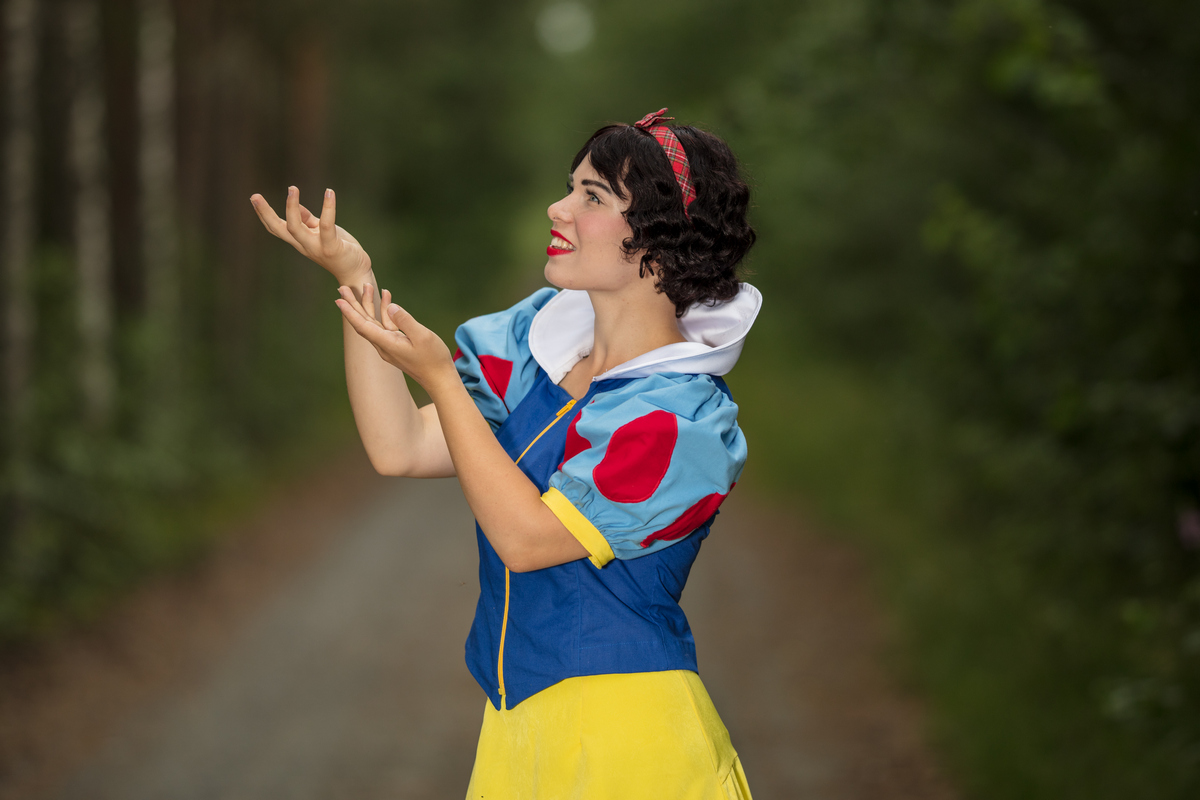
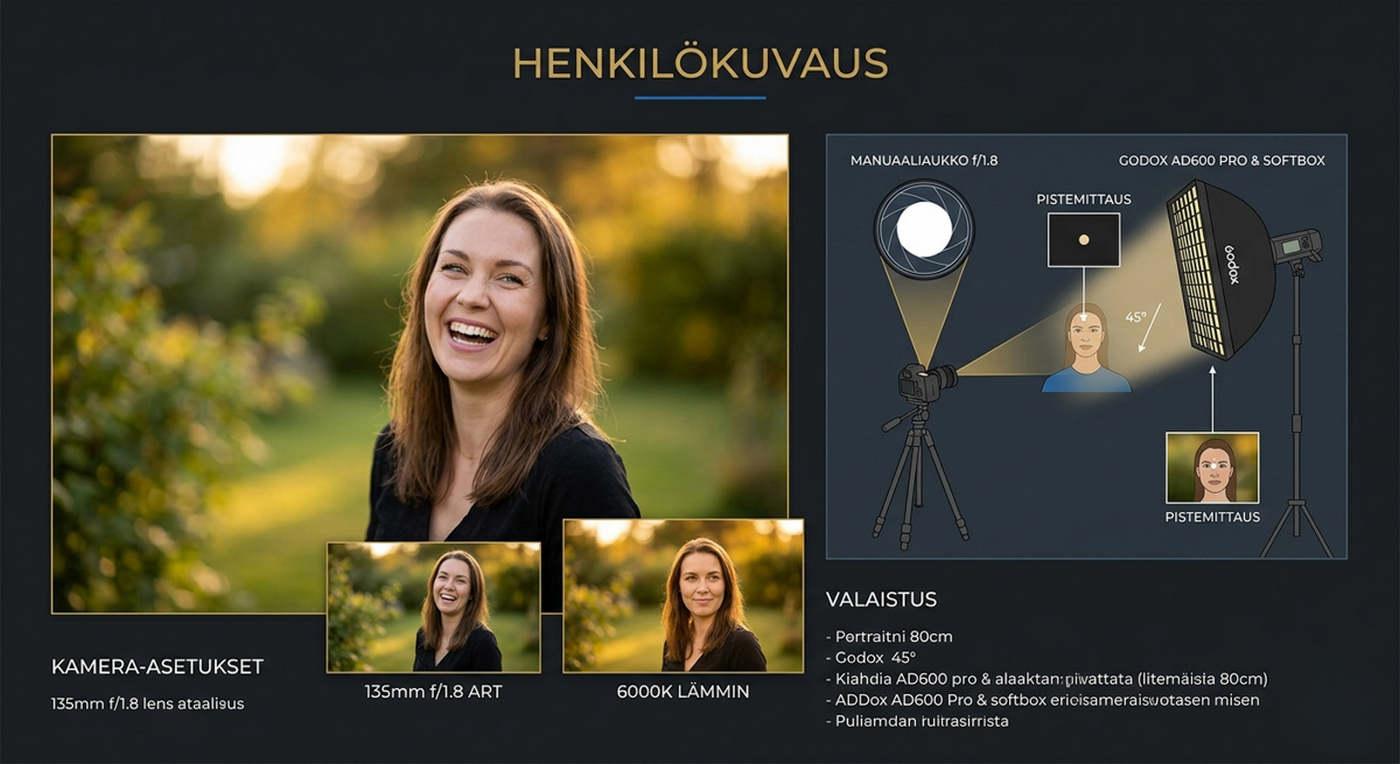
EXAMPLE PHOTOS