Street photography
Real situations, people and the pulse of the city. Capture everyday moments with clear technique and know the rules of photographing in public places.
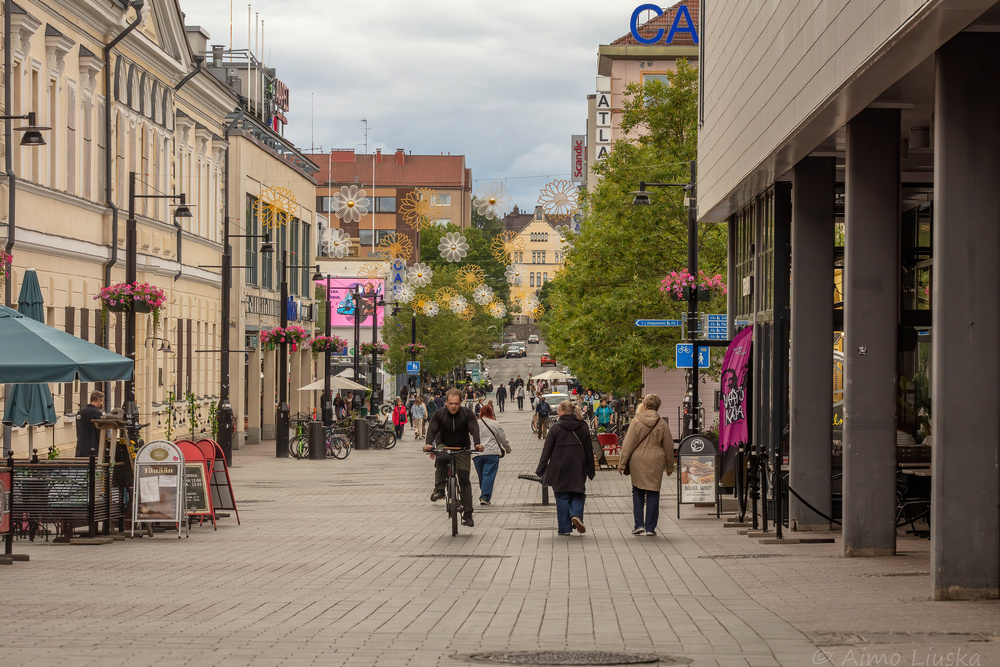
A street photographer's way of working
Find an interesting background and good light (e.g. hard shadows or a reflection in a shop window).
Use a fast shutter speed (1/500 s) and a small aperture (f/8) to get enough depth of field.
Wait ("fishing") for someone to walk into your composition, or move unnoticed with the flow of people.
Keep the camera ready, press the shutter without big gestures and walk on or smile.
If someone asks about the photo, be friendly and show them the picture if they ask.
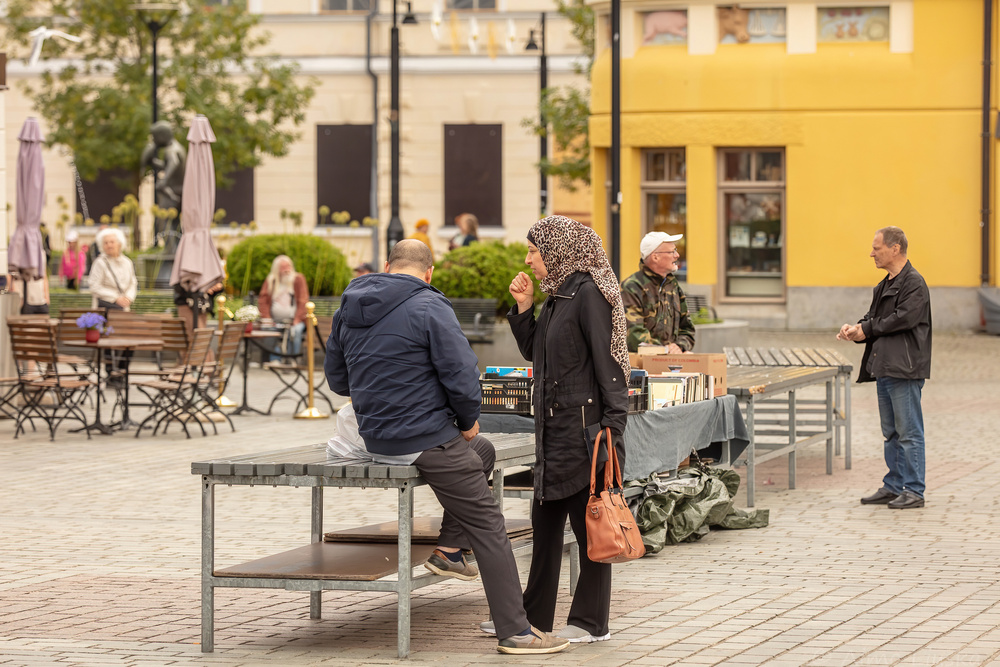
Street photography technique & gear
- Zone focusing: Set the aperture to f/8 and the focus manually to e.g. 3 metres. Everything between 2 and 6 metres is then automatically sharp, and there is no focusing delay.
- Light gear: A big lens and a huge DSLR scare people. A small prime lens (e.g. 35 mm or 50 mm) blends into the street unnoticed.
- Auto ISO & shutter priority: Set the shutter speed to at least 1/250–1/500 s to prevent camera shake and motion blur in people. Let the camera set the ISO automatically.
Legal matters (Finnish law)
| Place / situation | Taking photos | Publishing |
|---|---|---|
| A public place (street, market square, park) | Allowed freely without permission. | Allowed if the photo is not offensive or degrading. Advertising and other commercial use require the permission of any identifiable person. |
| Private domestic areas (gardens, homes, balconies) | Prohibited without the resident's permission (illicit observation). | Prohibited without separate permission. |
| Public indoor spaces (shopping centres, stations) | Generally allowed (the owner of the space may set rules). | Allowed for general scenes. |
Caught by eye contact? If your subject notices you photographing them, don't turn away in a panic or hide the camera. Smile and nod in a friendly way – openness calms the situation almost every time. If the person wants to know what you photographed, show them the picture and tell them you do street photography. Often this leads to a nice chat and sometimes even permission for a better portrait.
The most common pitfalls
- Shooting from far away with a telephoto: "Spying" from a distance with a long lens looks more suspicious to others than shooting up close with a 35 mm lens. Be brave and get close!
- Mixing feelings with the law: Even if someone shouts in a public place "you're not allowed to photograph me", the legal right to take the photo is on your side. Good judgement still matters most: it is wise to back off from pointless conflicts and delete the photo if the person is deeply upset.