Birds through a photographer's eyes
Species cards from my own bird photos from South Ostrobothnia, Finland. For each species you get its field marks, which species it can be confused with, when and where to find it and how to photograph it.
Choose a species
How to identify a bird from your own photo
Tufted duck Aythya fuligula
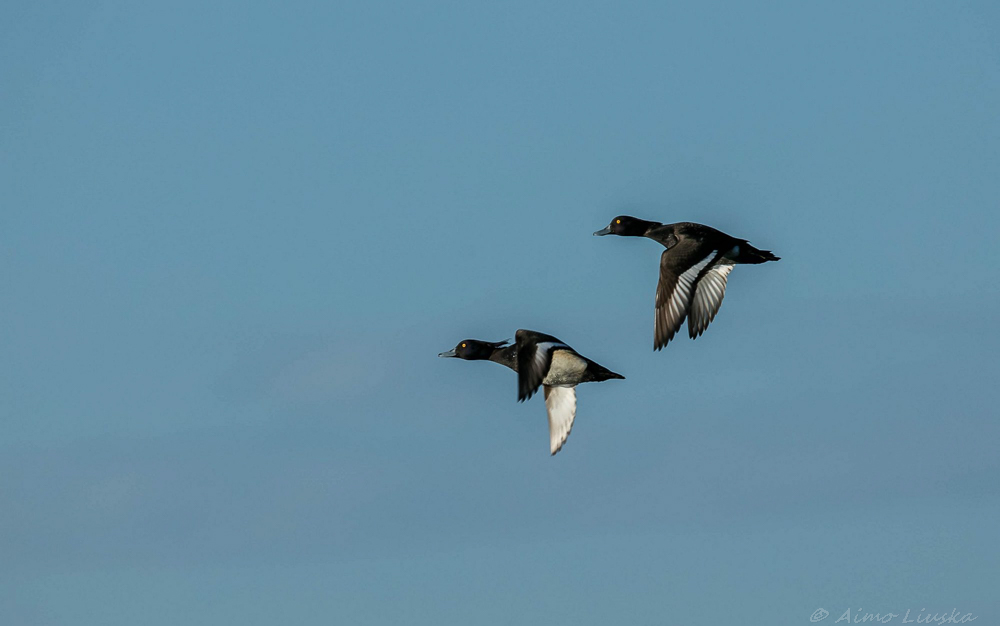 A pair of tufted ducks in flight, the male in front
- Yellow eye in both sexes
- Male: black head, breast and back, pure white flanks
- Female: dark brown, with brown flanks
- A tuft on the back of the head, which hardly shows in flight
- A broad white wing bar in flight
Photo tip: The white flanks blow out easily. Underexpose slightly (−0.3…−0.7 EV) and check the histogram. In flight, use continuous focus and at least 1/2000 s.
Try: 1/2000 s · f/6.3 · Auto-ISO · AI Servo / AF-C
Whooper swan Cygnus cygnus
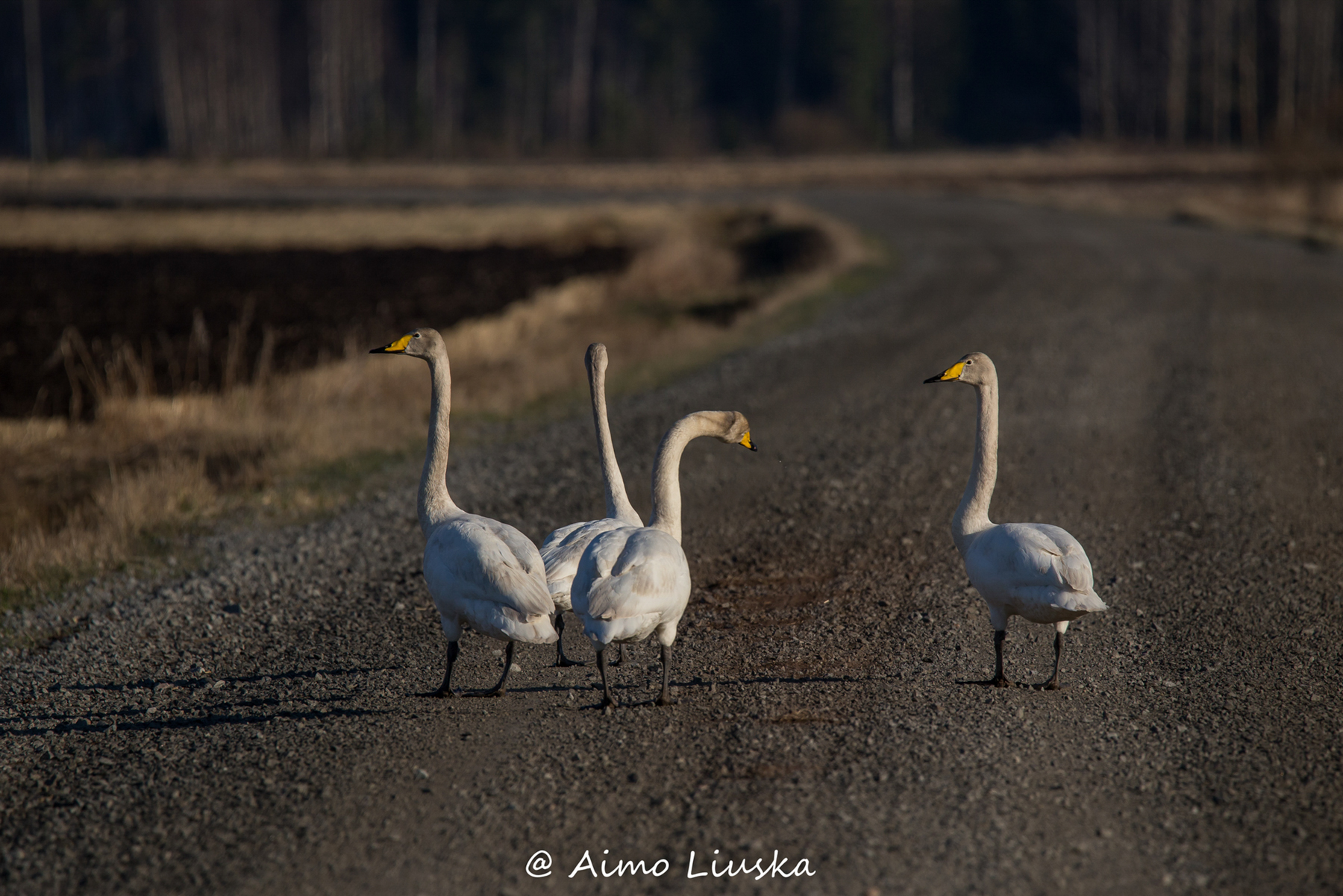 Whooper swans on a gravel road among the fields
- Finland's national bird
- A large yellow wedge at the base of the bill that reaches past the nostril
- The neck is held straight
- A loud, trumpet-like call that carries far
Photo tip: The white plumage is the brightest part of the photo. Expose for it so no detail is lost. Low morning light and mist make the best swan photos.
Try: 1/1000 s · f/7.1 · ISO 400 · exposure compensation −0.7 EV
Horned grebe Podiceps auritus
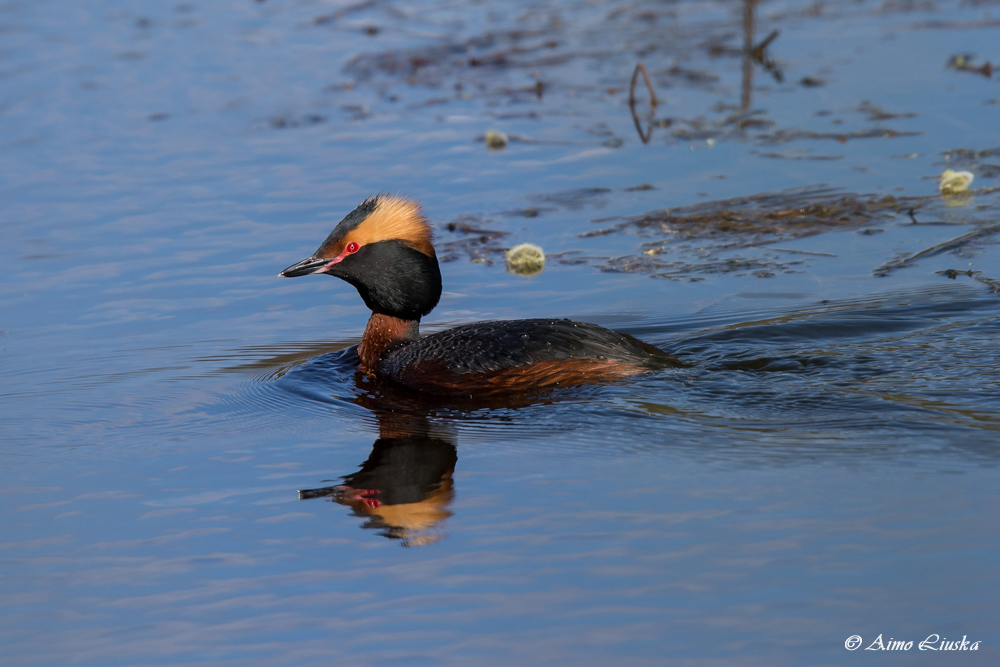 A horned grebe in summer plumage
- In summer plumage a black head and golden-yellow "horns" behind the eye
- Rusty red neck and flanks
- A bright red eye
- Dives often and surfaces further away
Photo tip: Shoot as low as possible, at water level. Then the background blurs and the bird looks natural. Focus on the eye, because the red eye is the most important detail in the photo.
Try: 1/1000 s · f/6.3 · Auto-ISO · focus on the eye
Western capercaillie Tetrao urogallus
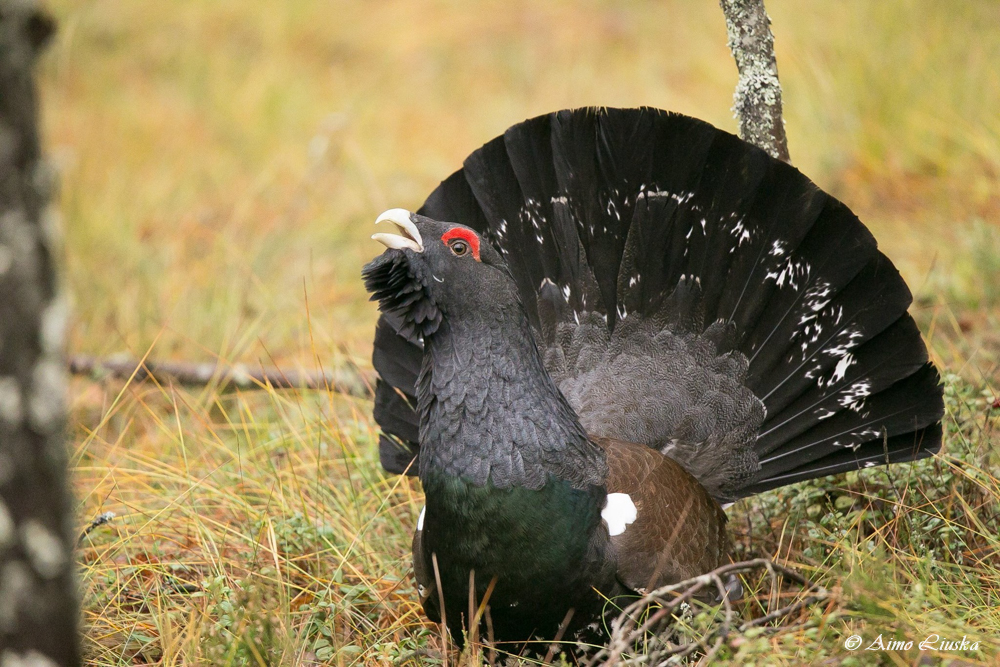 A male capercaillie displaying at the lek, tail fanned out
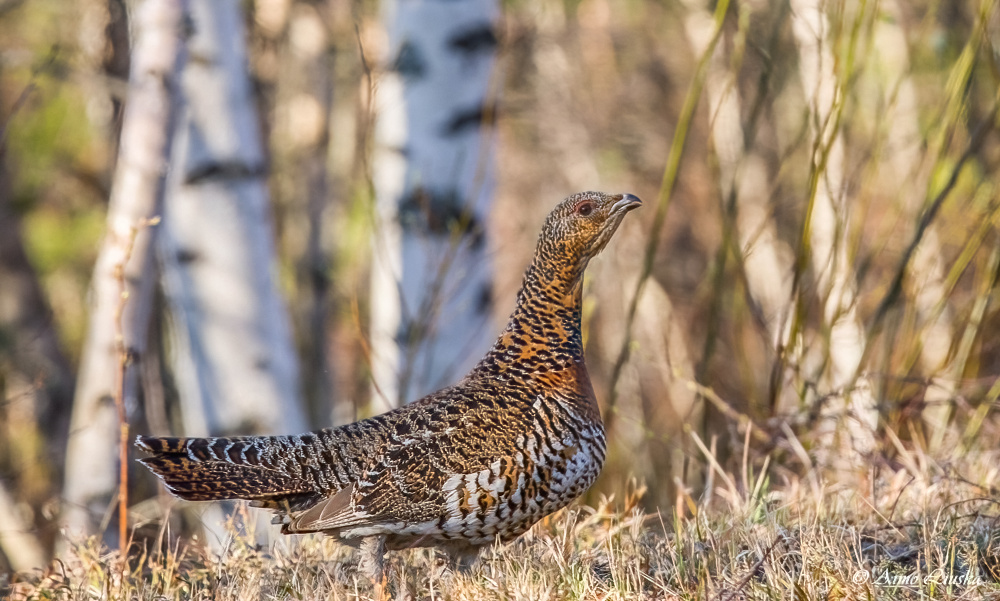 A capercaillie hen
- Finland's largest gamebird
- The male is dark, with a red patch above the eye, a pale bill and a white shoulder spot
- At the lek the male fans its tail
- The female (hen) is mottled brown, with a rusty red patch on the breast
Photo tip: The lek is sensitive. Don't walk onto the lek site; shoot from a hide that you enter the evening before or before dawn. Disturbance can make the whole lek move. In autumn, when shooting from a forest road, the car works as a hide.
Try: 1/500 s · f/4 · ISO 1600–6400 (twilight)
Common kestrel Falco tinnunculus
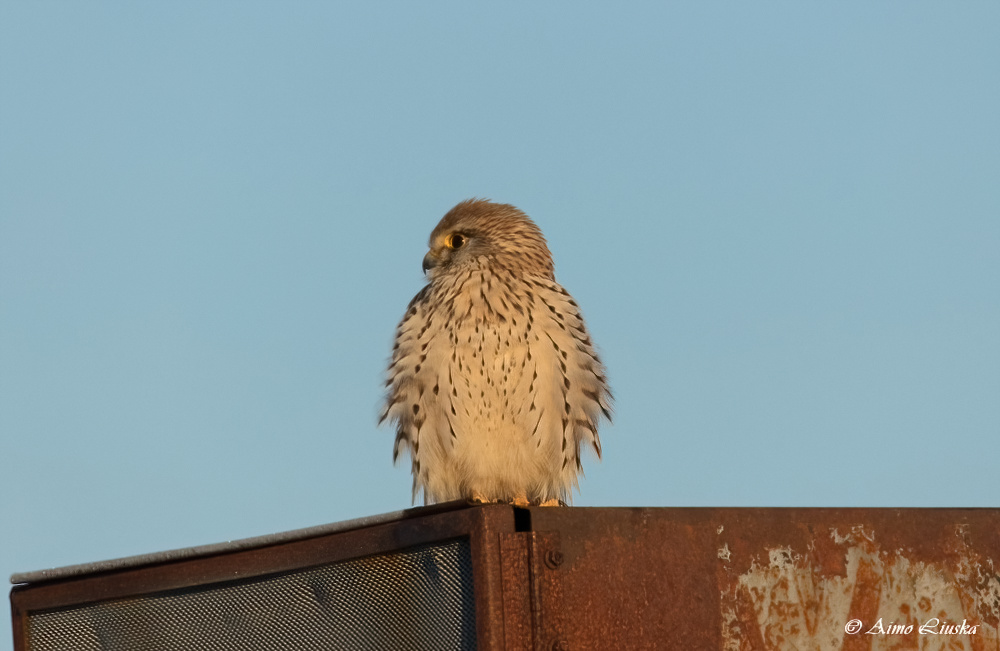 A kestrel in evening light
- Rusty brown back with black spots
- The male has a grey head and tail, the female is browner and barred
- Yellow eye-ring and legs
- Hovers, flying on the spot in the air while looking for prey
Photo tip: A hovering kestrel can be photographed precisely, because it stays still for a moment. A short shutter speed freezes the wings. When photographing nest boxes and barns, keep your distance so the nesting isn't disturbed.
Try: 1/2000–1/3200 s · f/6.3 · Auto-ISO · burst mode
Merlin Falco columbarius
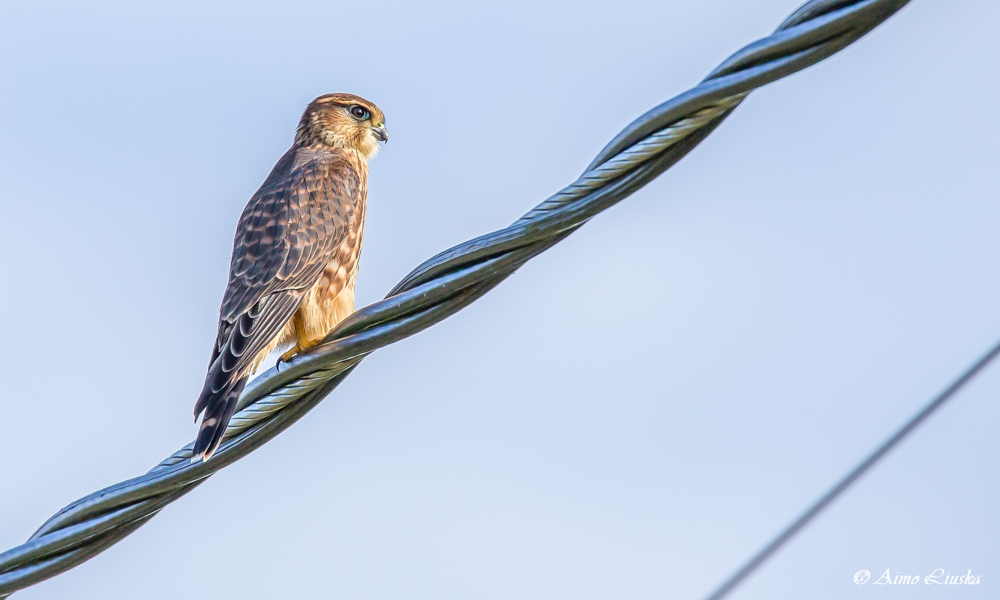 A small falcon on a power line
- Finland's smallest falcon, almost the size of a thrush
- The male has a blue-grey back
- The female and young birds are brown, with a heavily streaked breast
- A faint moustache stripe, and a fast, low flight
Photo tip: A falcon sitting on a wire is easy to shoot from below against a bright sky. Then add +0.7…+1 EV of exposure so the bird doesn't become a dark silhouette.
Try: 1/1600 s · f/7.1 · Auto-ISO · exposure compensation +0.7 EV
The identification of this species from the photo is still being confirmed. Send feedback if you think the bird is a different species.
Back to the species listCommon crane Grus grus
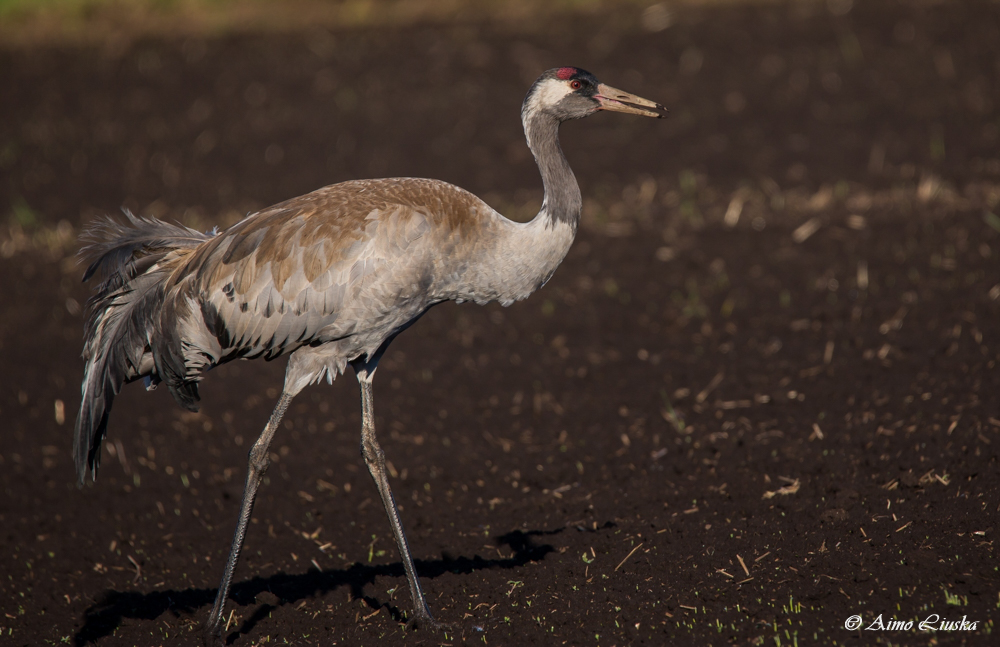 A crane on a spring field
- A large grey bird with a long neck and long legs
- Black-and-white head and neck, red crown
- A fluffy "bustle" at the back, made of wing feathers
- Flies with its neck and legs straight, and its trumpeting call carries for kilometres
Photo tip: The crane is very shy. Shoot from a car or a hide, and don't approach on foot. Morning mist and backlight make crane flocks atmospheric.
Try: 1/1000 s · f/6.3 · ISO 400–1600
Common snipe Gallinago gallinago
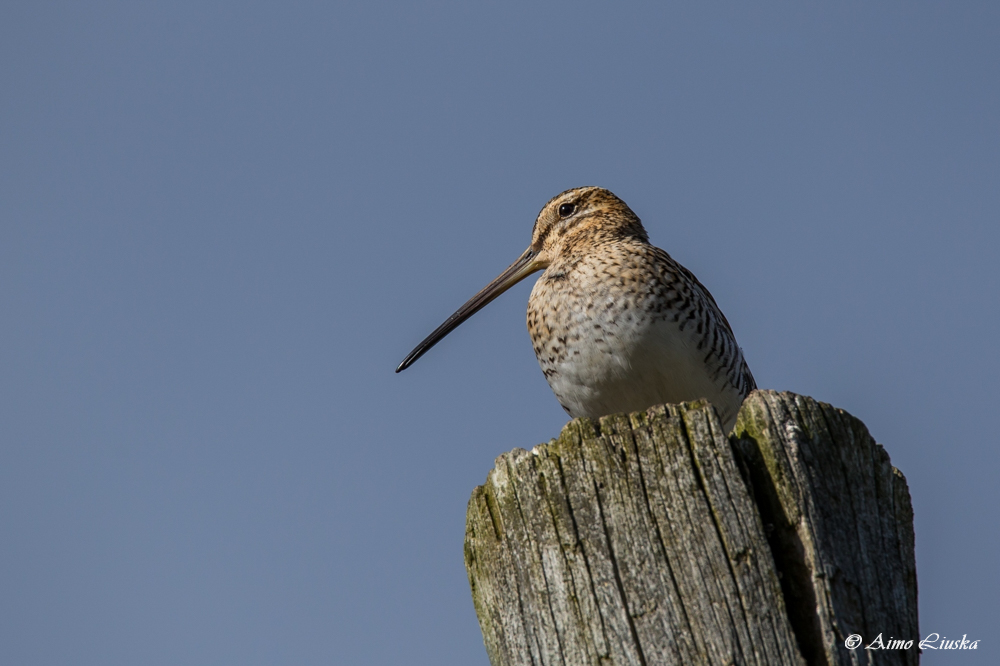 A common snipe on a fence post
- A very long, straight bill
- Mottled brown, with pale stripes running along the head
- In its display flight the tail feathers make a bleating sound, which gave the bird its Finnish name ("sky goat")
Photo tip: In spring the snipe often sits on a fence post. That gives a clean photo against an even sky. Shoot from a car and wait for the bird to turn its head into profile.
Try: 1/1000 s · f/7.1 · ISO 400
Great spotted woodpecker Dendrocopos major
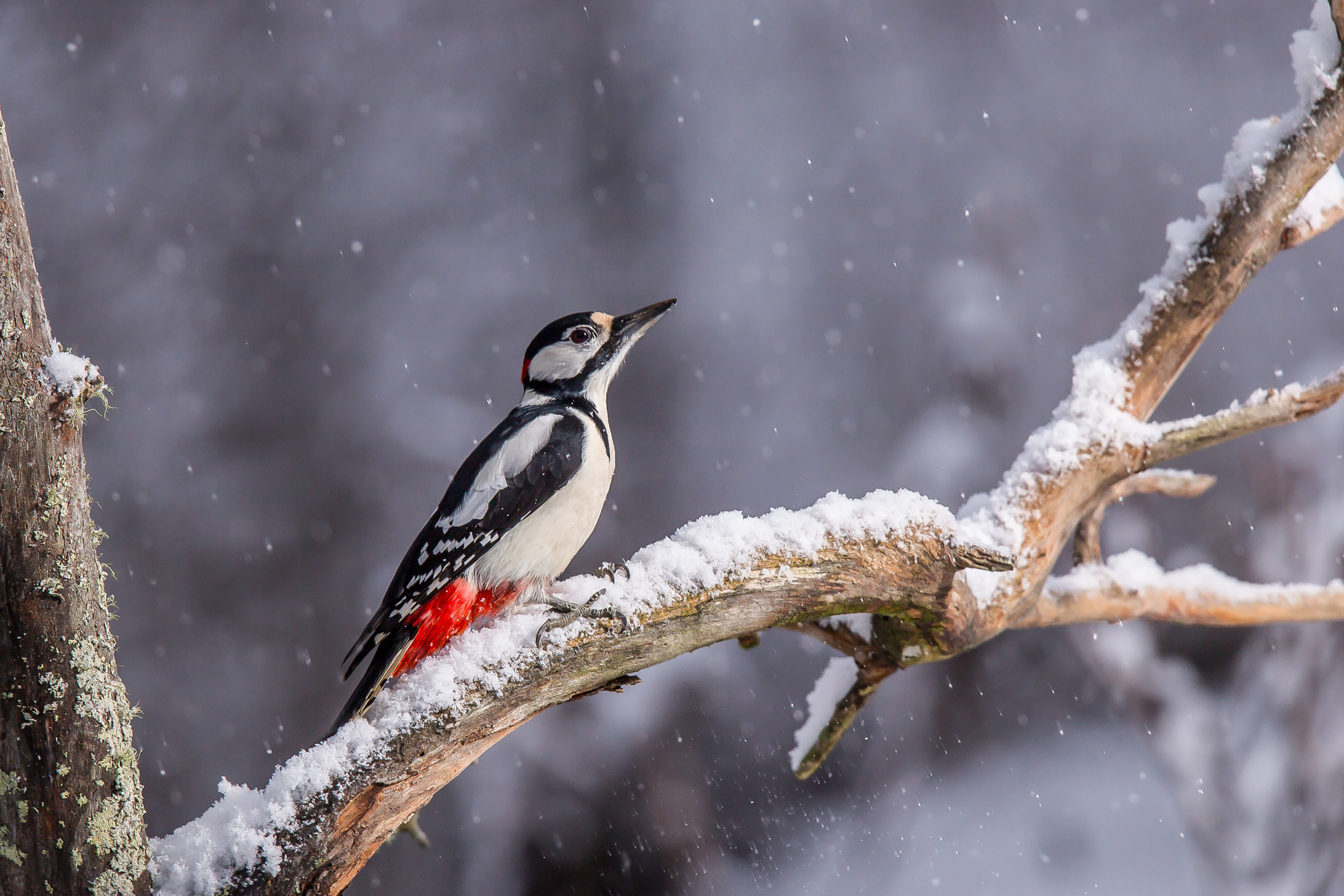 A great spotted woodpecker in falling snow
- Black and white, with large white patches on the shoulders
- Red under the tail
- The male has a red patch on the nape, a young bird a red crown
- Drums on a dry branch in spring
Photo tip: Put a natural branch or a dead stump near the feeder for the woodpecker to land on. Then the photo doesn't look like a feeder photo. In falling snow, 1/250–1/500 s leaves a little movement in the flakes.
Try: 1/500 s · f/5.6 · ISO 800–1600
Common chaffinch Fringilla coelebs
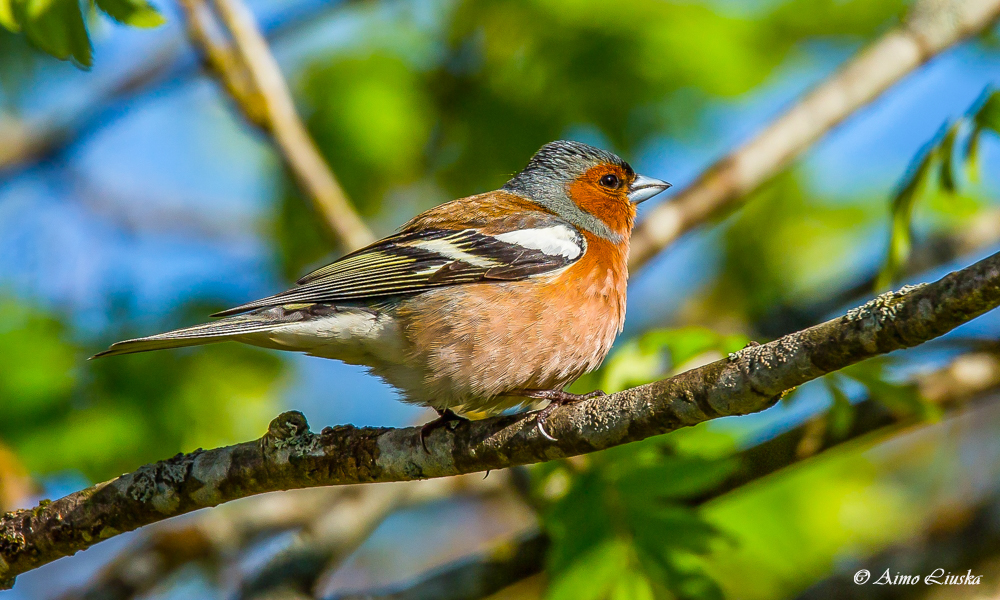 A male chaffinch on a birch branch
- The male has a blue-grey crown and a reddish-brown breast
- Two clear white bars on the wings, which the female has too
- The female is greyish brown
- One of the first singers of spring, and the song ends in a flourish
Photo tip: A singing male sits on the same branch for a long time. Find an angle where the background is far away, so the green background blurs evenly.
Try: 1/800 s · f/5.6 · ISO 400
Yellowhammer Emberiza citrinella
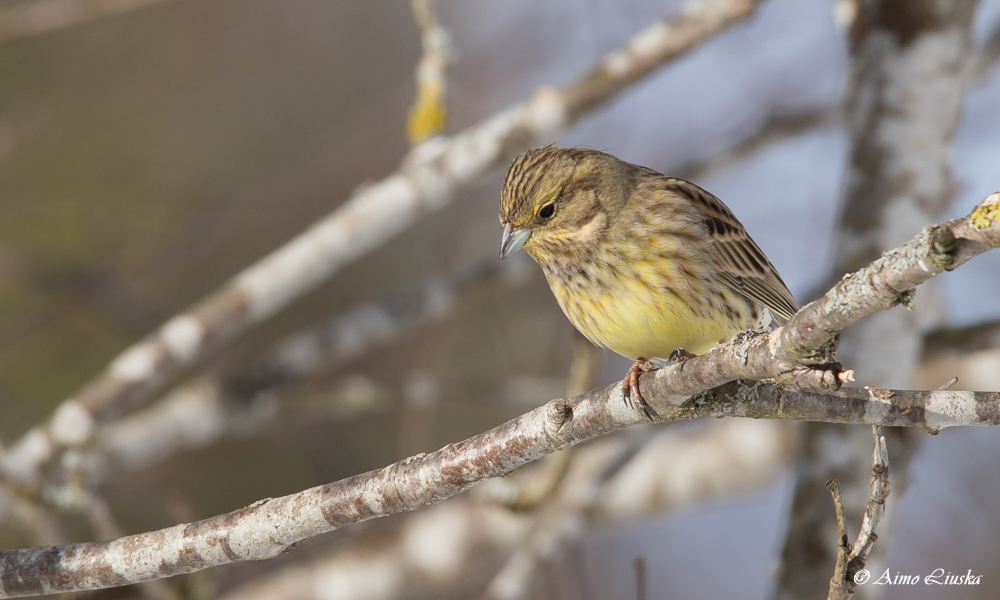 A yellowhammer on a birch branch
- The male has a bright yellow head and belly
- The female and young birds are browner and streaked, but they also have a yellow tone
- Rusty brown rump
- The song: "ti-ti-ti-ti-ti-tee-tyy"
Photo tip: In winter a yellow bird in a white landscape is a striking subject. Keep the background far away and photograph the bird from its eye level.
Try: 1/800 s · f/6.3 · ISO 400–800
Eurasian siskin Spinus spinus
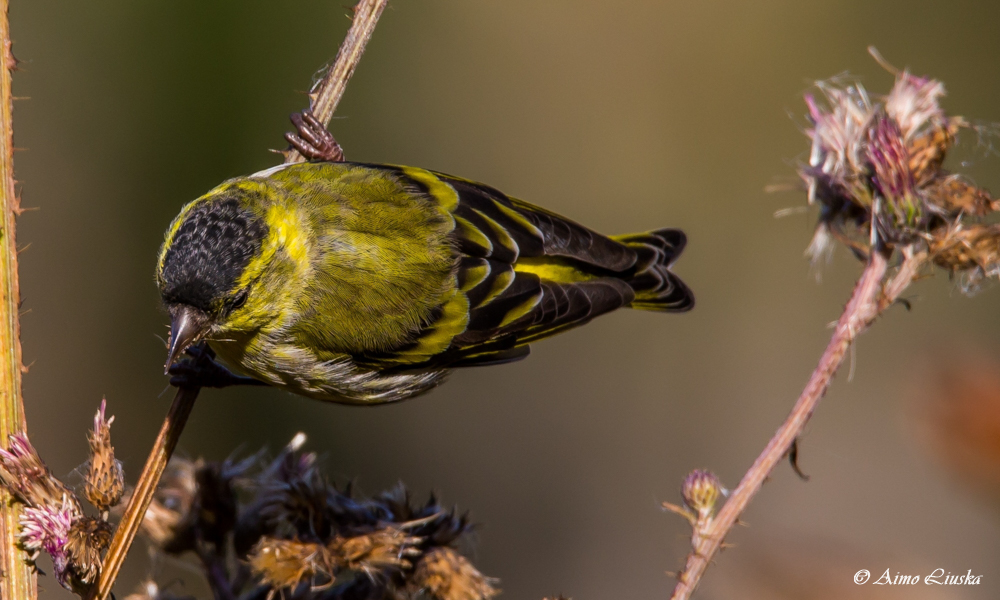 A male siskin on a thistle
- Small and yellow-green
- The male has a black crown and chin
- Yellow bars on the wings
- Moves in flocks and hangs skilfully at the tips of branches
Photo tip: In autumn siskins eat thistle and burdock seeds. If you settle near a feeding spot and wait, the flock comes close.
Try: 1/1000 s · f/6.3 · ISO 400–800
Willow warbler Phylloscopus trochilus
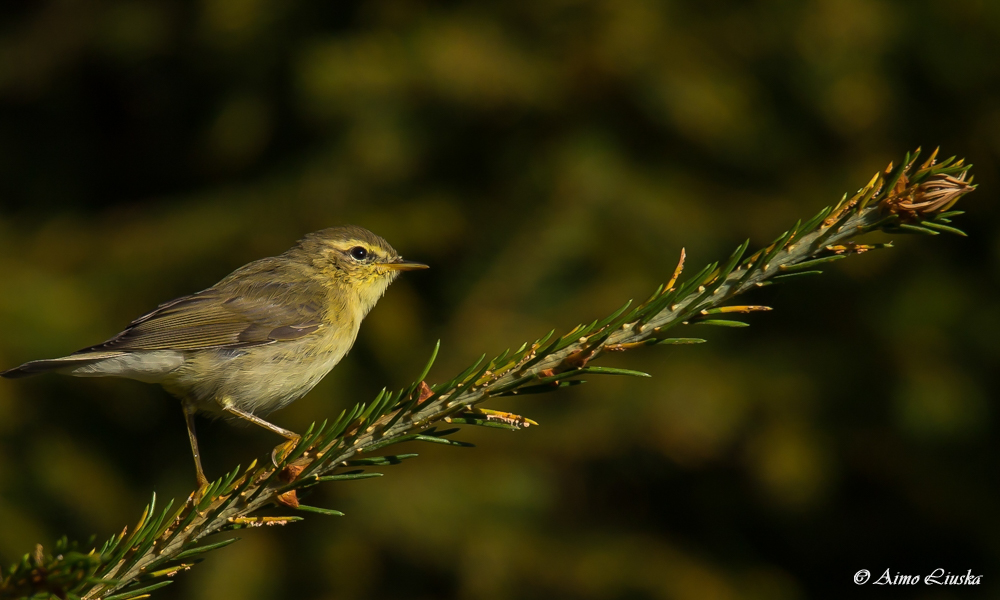 A small warbler on a spruce branch
- Small and greenish grey, with a pale stripe above the eye
- Legs usually pale
- Finland's most common bird
- The song is a soft, descending warble
Photo tip: Warblers move constantly. Pre-focus on a branch the bird returns to, and shoot in bursts.
Try: 1/1000 s · f/5.6 · Auto-ISO · burst mode
The identification of this species from the photo is still being confirmed. Send feedback if you think the bird is a different species.
Back to the species listRed-backed shrike Lanius collurio
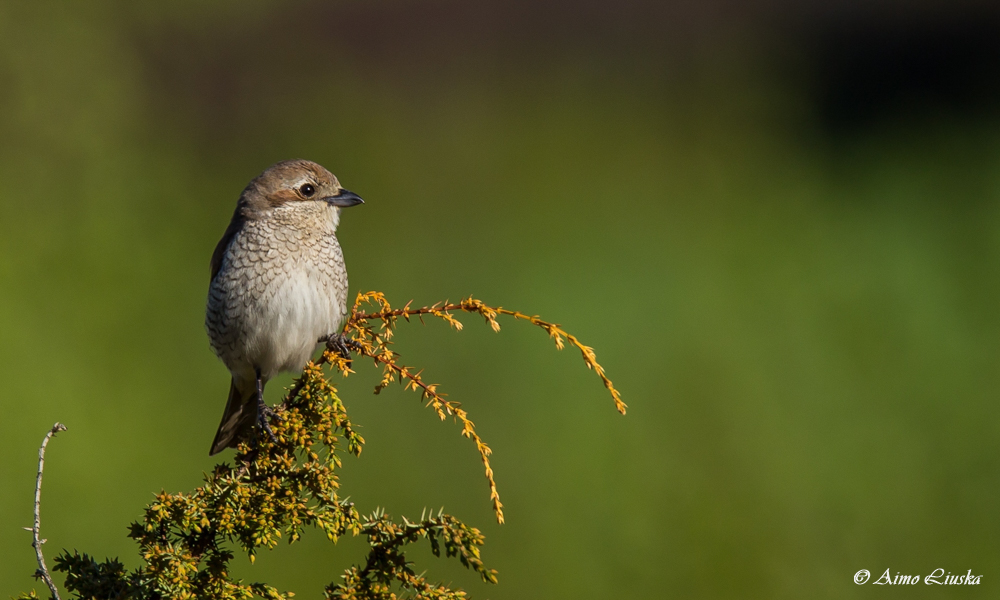 A female red-backed shrike on top of a juniper
- A hooked bill like a small bird of prey
- The male has a grey head, a black eye stripe and a reddish-brown back
- The female is brown, and its pale breast has a scaly pattern
- Keeps watch from the top of a bush
Photo tip: The red-backed shrike returns to the same lookout spots. When you find its favourite branch, settle further away and wait. Choose a background of even green.
Try: 1/1000 s · f/6.3 · ISO 400
White wagtail Motacilla alba
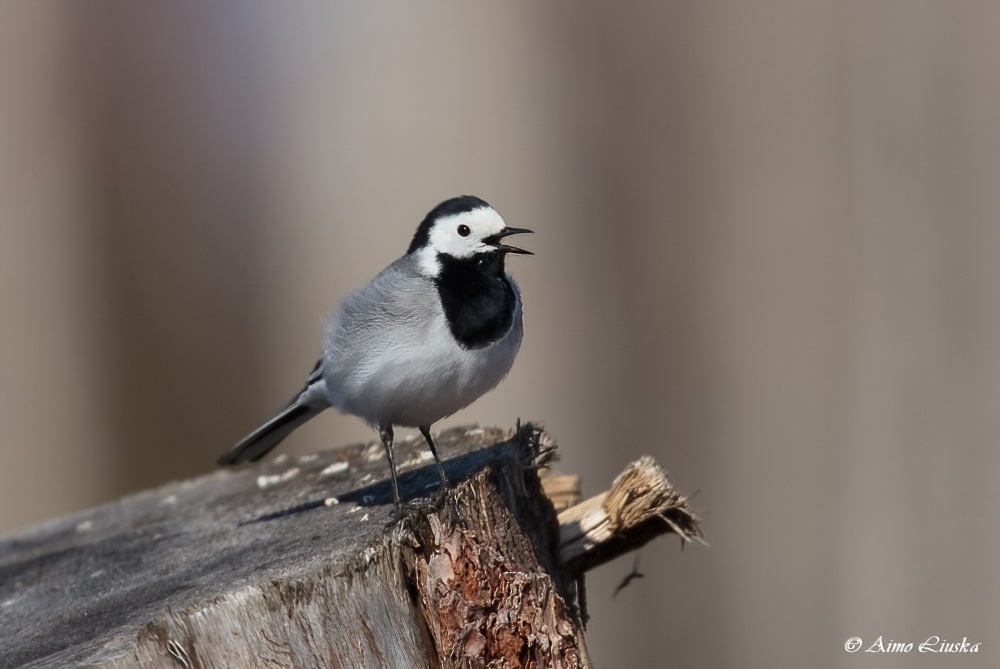 A white wagtail on a tree stump
- Grey, black and white
- A long tail that it wags constantly
- Runs fast on the ground
- One of the best-known signs of spring
Photo tip: The white wagtail is tame, but it's on the move all the time. Get down on the ground to its level. Then the background is far away and the photo shows the bird's world.
Try: 1/1250 s · f/6.3 · ISO 400
The bird always matters more than the photo
Read more: The Bird photography guide goes through the gear, focusing and technique.