PRO GUIDE
LANDSCAPE PHOTOGRAPHY
Learn to capture the beauty, depth and light of nature in striking, sharp landscape photos.
INSPIRATION
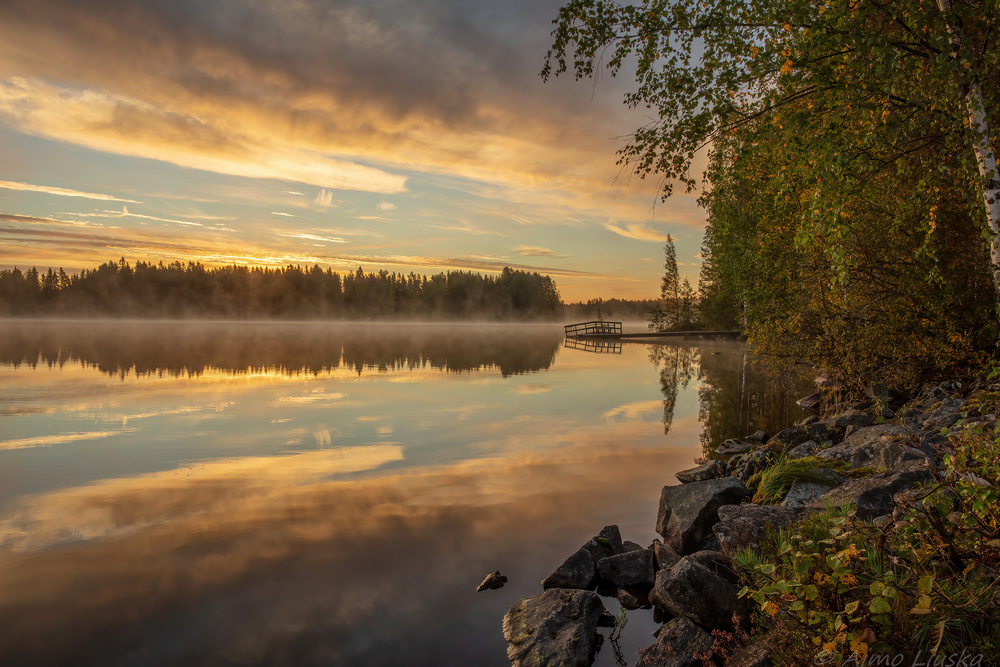 Warm light and rocks in the foreground give the photo depth.
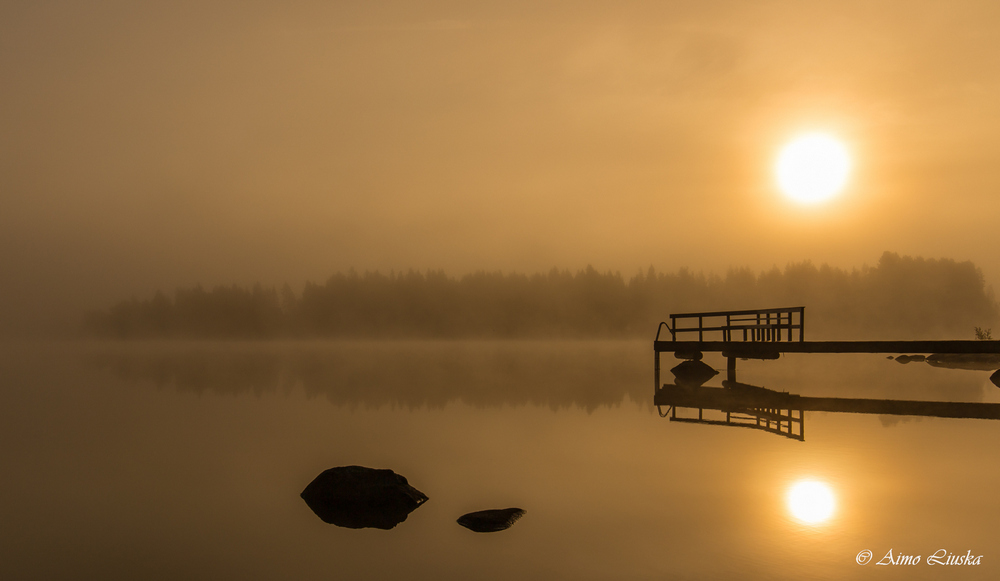 A calm mirror reflection on still water in the morning.
EXAMPLE PHOTOS TO START
Warm light and rocks in the foreground give the photo depth.
A calm mirror reflection on still water in the morning.
COMPOSITION
1. CREATE DEPTH AND DRAMA
A great landscape photo is not just a flat record of a scene – it draws the viewer into the landscape. Use these basic rules:
- A foreground element: Place something interesting along the bottom edge (a rock, a plant, a path or a branch). It makes the photo feel three-dimensional.
- The rule of thirds: Put the horizon on the lower or upper third. If the sky is dull, give more room to the land.
- Leading lines: Use riverbeds, roads or the shoreline to lead the viewer's eye straight to the main subject.
SETTINGS
2. THE BEST CAMERA SETTINGS
In landscape photography you usually want maximum sharpness from near to far:
Aperture: f/8 – f/11
Gives a deep depth of field without the softening caused by diffraction.
ISO: ISO 100
Keep the ISO as low as possible for the best image quality and the least noise.
Tripod & release
Use a sturdy tripod and a remote release or the 2-second timer to prevent camera shake.
Focusing
Focus about a third of the way into the scene. A more precise method is the hyperfocal distance: for example with a 24 mm lens at f/11 on full frame it is about 1.7 m, so everything from about 0.9 metres to infinity is sharp.
TIMING
3. MAKING THE MOST OF LIGHT AND WEATHER
Harsh midday sun often makes a landscape look flat and blown out. Favour these moments:
- Golden hour: Just after sunrise and before sunset the light is warm and the shadows are long.
- Blue hour: After sunset the sky glows a deep blue and creates a mysterious mood.
- Storms and fog: Don't stay at home in bad weather! Fog, dramatic cloud formations and rain bring a unique drama to the photo.
TROUBLESHOOTING
4. COMMON PROBLEMS
Sky too bright?
Use exposure bracketing (AEB / HDR) or a graduated ND filter (GND), which darkens only the sky and leaves the land as it is. Lightroom's sky mask can also fix small differences afterwards.
Water looks restless?
Use an ND filter to lengthen the shutter speed (e.g. 2–10 seconds) so the water surface turns silky smooth.
GALLERY
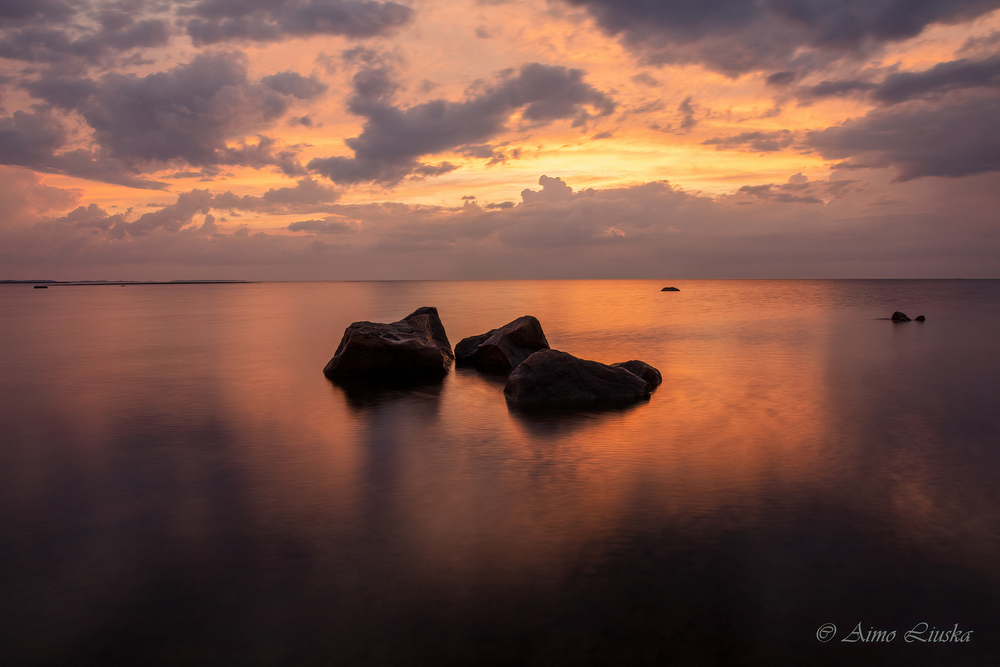 A long shutter speed turns waves and clouds into a soft mass.
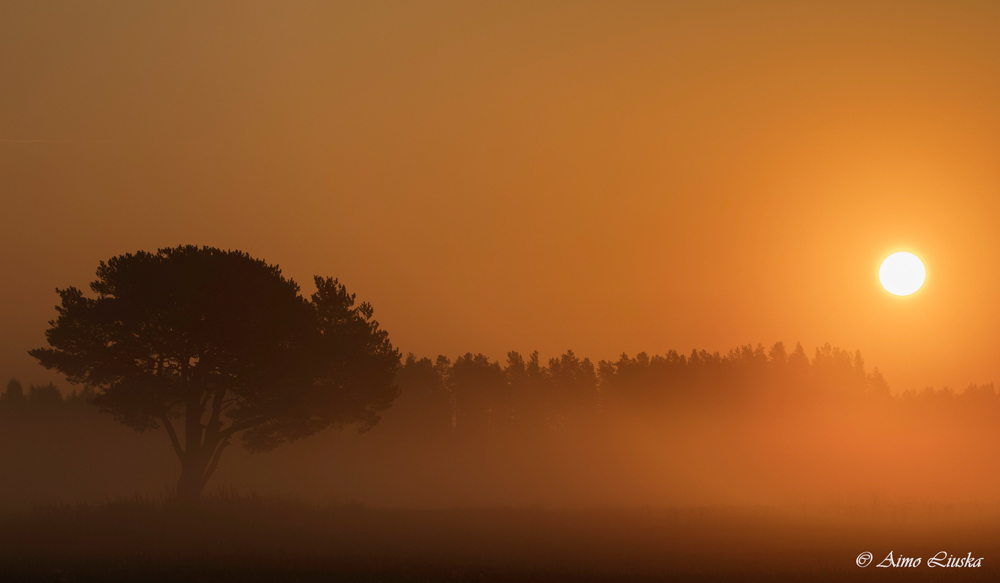 Autumn colours and morning mist create a fairy-tale mood.
MORE EXAMPLE PHOTOS
A long shutter speed turns waves and clouds into a soft mass.
Autumn colours and morning mist create a fairy-tale mood.