MACRO PHOTOGRAPHY BASICS
Learn to see the world of tiny details and create stunning macro photos with professional gear.
1. TRUE MAGNIFICATION (1:1)
True macro photography needs a lens with a magnification ratio of 1:1. This means the subject is projected onto the camera's sensor at exactly its real size.
2. WHAT MAKES A GOOD MACRO LENS?
The right tool depends on your budget and what you photograph:
- 90 mm – 105 mm prime lenses: The most popular choice. They give you enough working distance so that you do not cast a shadow on the subject or scare insects away.
- Close-up lenses or extension tubes: An affordable way to start macro photography with a normal lens before buying a dedicated macro lens.
3. DO YOU NEED A FLASH?
Not necessarily, but it makes shooting much easier. Because you work very close to the subject in macro photography, the amount of light often drops critically.
- Natural light: Works very well on a cloudy day or in the shade, when the light is soft. In direct sunlight the shadows become too harsh.
- Flash and diffuser: A separate flash with a diffuser lets you use a small aperture and freezes the subject's movement when shooting handheld.
4. MASTER THE TECHNIQUES
Macro photography is all about millimetre-precise adjustments. Use these techniques:
- Manual focus: Autofocus often stutters or hunts at close range. Switch to manual focus, set the magnification you want and focus by moving yourself gently forwards and backwards.
- Controlling depth of field: Use a smaller aperture (e.g. f/8 – f/11) to get more of the subject sharp. Avoid too small an aperture (f/22), which reduces optical sharpness.
- Support and stability: Even a tiny movement shifts the focus off the subject. Use a tripod whenever possible or keep the shutter speed fast.
5. EXAMPLE PHOTOS
Here are a few examples of what a macro lens can do:
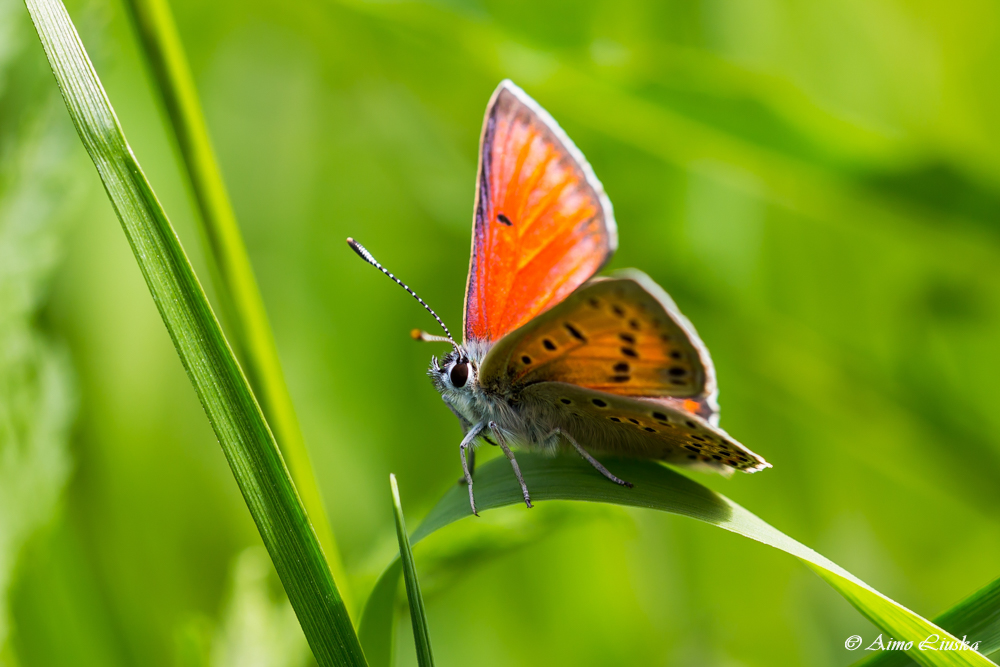
Male scarce copper butterfly.
Sigma 105mm f/2.8 EX DG Macro OS
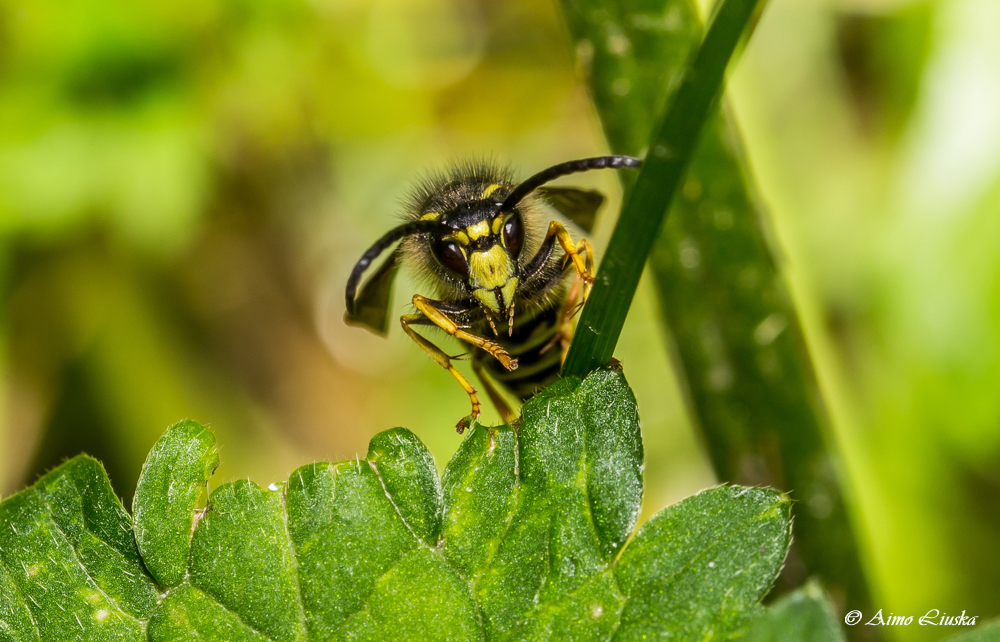
A wasp looking straight at the camera.
Sigma 105mm f/2.8 EX DG Macro OS